
 Eseandre Mordi
⬤ Fresh Microsoft data paints a clear picture of how geography is reshaping the AI landscape. DeepSeek's market share tells two very different stories depending on where you look. While North America and most of Europe show barely any uptake, countries like China, Russia, Belarus, Iran, Cuba, and numerous African nations are seeing significantly higher adoption. The common thread? Many of these regions face barriers when trying to access U.S.-based AI platforms.
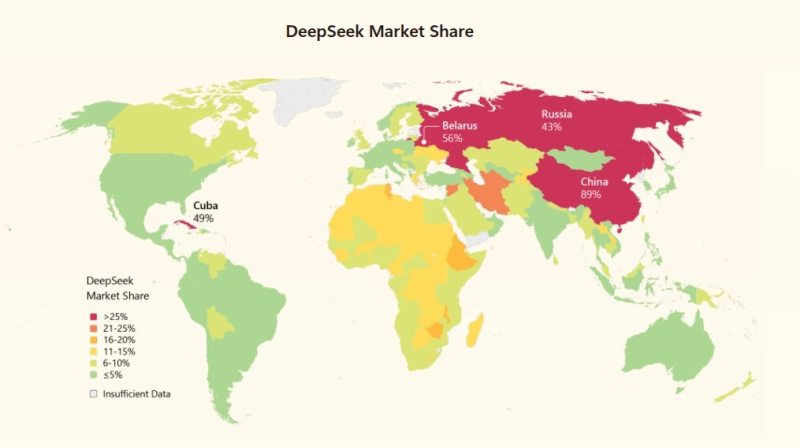
⬤ China leads the pack with a staggering 89% market share for DeepSeek. Russia follows at around 43%, with Belarus hitting approximately 56%. Across Africa, adoption rates consistently run two to four times higher than in Western countries where ChatGPT and other mainstream platforms operate freely. These aren't small differences—they're fundamental splits in how different parts of the world are accessing AI technology.
⬤ What's driving this divide isn't necessarily product quality or features. DeepSeek is gaining ground primarily because it's available where alternatives aren't. In markets facing policy restrictions, high costs, or infrastructure challenges with Western AI services, DeepSeek has positioned itself as a viable option that fits local economic realities and regulatory frameworks. Affordability and accessibility are proving more important than brand recognition in these emerging markets.

⬤ This geographic pattern matters beyond simple market statistics. It shows that AI adoption worldwide isn't following a single path—instead, it's fragmenting along economic, political, and regulatory lines. Where you live increasingly determines which AI tools you can actually use. As global AI adoption accelerates, these regional constraints aren't going away. If anything, they're creating a more divided AI ecosystem where market share reflects access barriers as much as technological merit.
 Eseandre Mordi



