
 Alex Dudov
⬤ Alibaba Group Holding Ltd. (BABA) caught the market's attention after top voices in China's AI sector admitted the odds aren't looking great for catching up to U.S. giants anytime soon. Here's the thing—Chinese AI leaders are putting the chances of leapfrogging OpenAI and Anthropic through major breakthroughs at less than 20% over the next three to five years. The main culprit? A serious shortage of computing power.
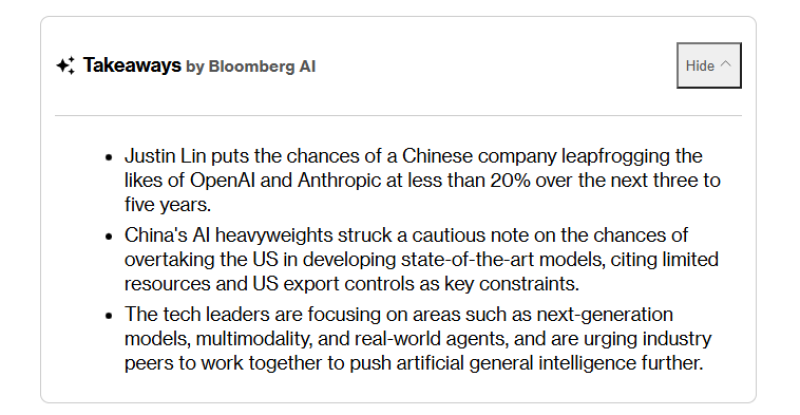
⬤ Justin Lin, who runs Alibaba's Qwen open-source model series, laid it out plainly: American AI labs are throwing massive compute resources at next-gen research, while Chinese developers are stuck dealing with severe shortages. Most of the computing capacity they do have gets eaten up by inference and service delivery, leaving almost nothing for the foundational research needed to build truly competitive models.
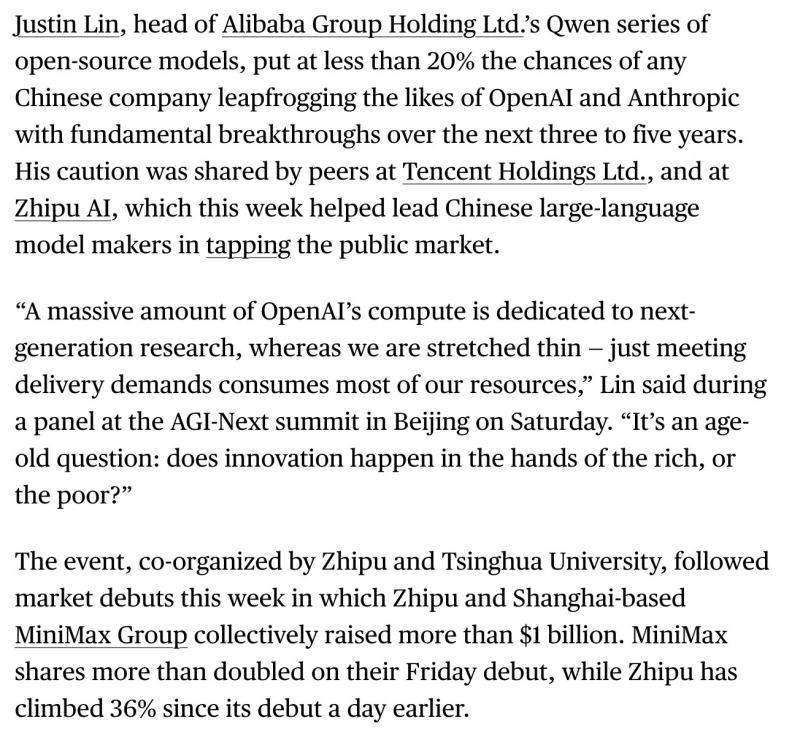
⬤ Executives at Tencent Holdings and Zhipu AI echoed the same concerns. This all came up during a pretty wild week—Zhipu and Shanghai's MiniMax Group pulled in over $1 billion combined through recent public listings. MiniMax shares more than doubled on debut, and Zhipu climbed 36% right after listing, showing strong investor appetite despite the technological hurdles. But industry leaders keep pointing to U.S. export controls and restricted access to advanced chips as ongoing roadblocks.
⬤ What this really shows is how computing power has become the defining advantage in the global AI race. With the U.S. controlling most of the advanced hardware, energy infrastructure, and large-scale resources, innovation momentum keeps tilting toward American labs. Chinese AI firms can still grow commercially and raise capital, but limited compute access is reshaping expectations around long-term competitiveness and where the sector is actually headed.
 Alex Dudov



