
 Victoria Bazir
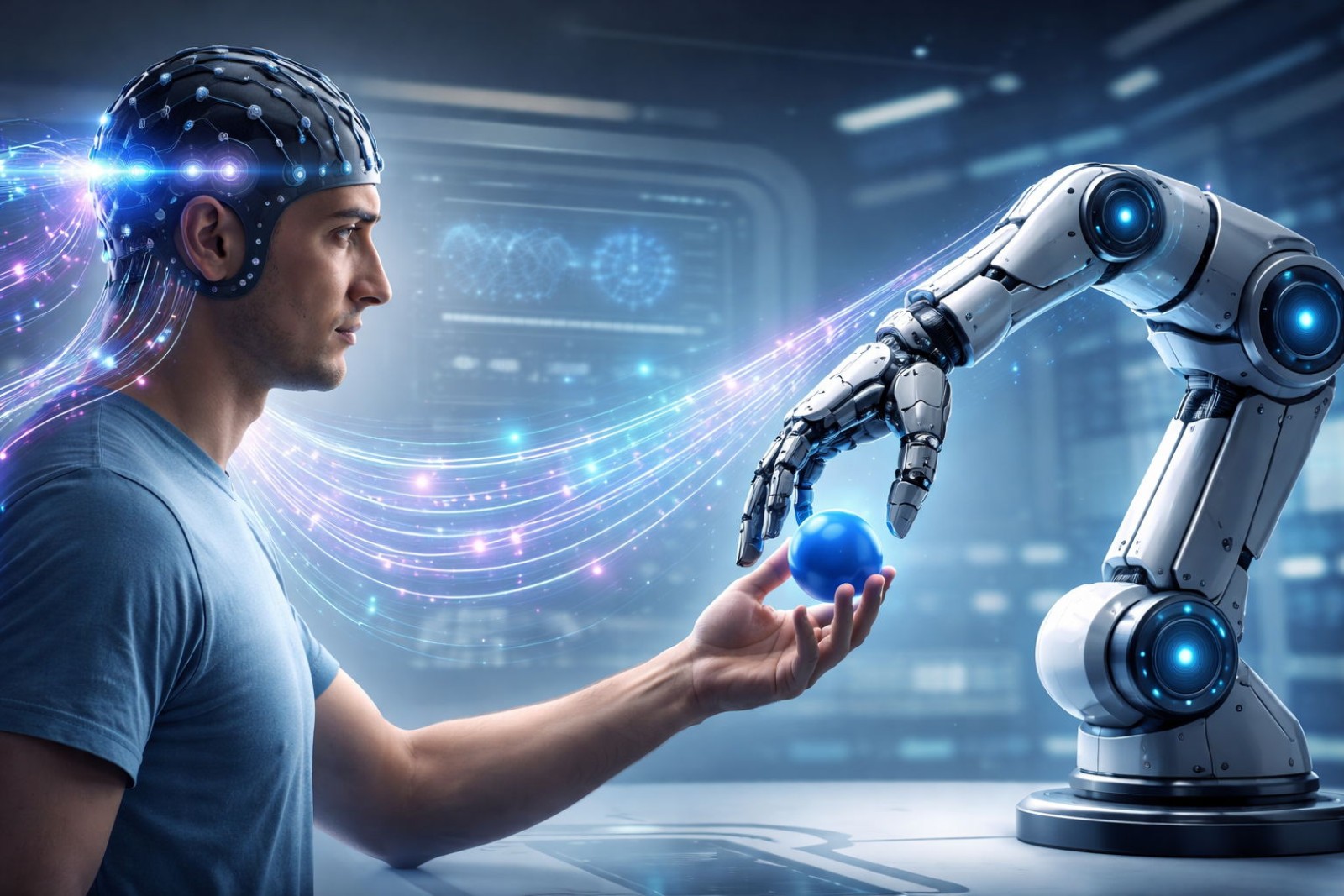
⬤ Brain-computer interface technology is advancing fast, with new demos showing robotic arms controlled entirely through EEG signals and eye tracking. As reported by Ryota Kanai, users can now grab and pass objects using only mental intent and gaze - no physical input required. Researchers believe these systems could eventually scale to full humanoid robots built for complex and hazardous environments.
⬤ Non-invasive EEG combined with gaze tracking translates human intent directly into physical motion. In one demonstration, a user picked up a mug simply by imagining the action. This seamless link between cognition and robotics mirrors broader industry moves toward unified machine intelligence - efforts like DeepMind hiring Boston Dynamics CTO to build a universal robot brain point to a future where a single AI layer controls diverse robotic platforms.
⬤ Neural robotics also connects to the emerging humanoid wave. Projects like the AheadForm F1 humanoid robot - a single machine designed for 4 distinct roles - reflect a broader shift toward machines that read and respond to human intent. Meanwhile, software is keeping pace: as LangChain's research on agent engineering shows, AI agents are now being trusted with real-world autonomous decision-making.
⬤ The convergence of AI reasoning, robotics, and neural interfaces is reshaping what is possible. Beyond industrial automation, brain-controlled robotics opens new pathways for accessibility - giving people with limited mobility direct physical agency through machines. As research accelerates, neural interfaces and AI may fundamentally redefine how humans interact with technology and drive the next stage of embodied intelligence.
 Victoria Bazir



