
 Saad Ullah
⬤ Samsung Securities released updated forecasts for high-bandwidth memory distribution among top suppliers, showing Micron positioned to capture just a sliver of Google's HBM volumes. The numbers paint a clear picture: Samsung and SK Hynix aren't loosening their grip on supply chains heading into 2025 and 2026, leaving Micron with limited room to grow.
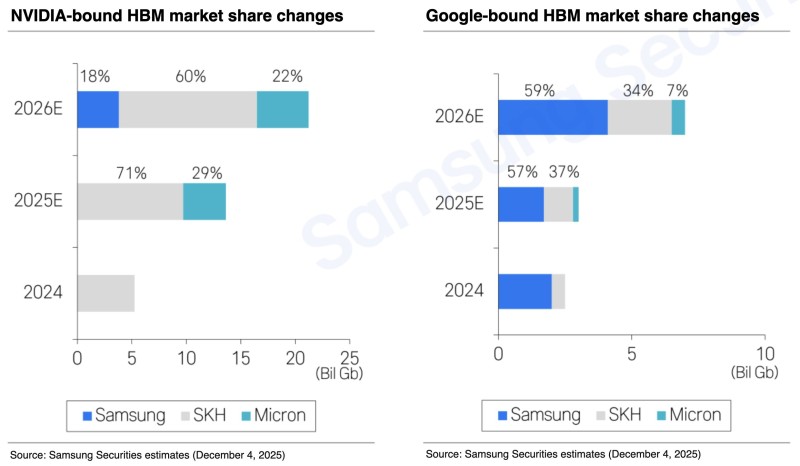
⬤ Looking at Google's HBM procurement for 2026, Samsung is expected to command 59% of the supply, with SK Hynix taking 34% and Micron trailing at a mere 7%. These projections throw cold water on recent speculation that Micron would snag a major chunk of Google's TPU memory requirements. The breakdown confirms what many industry watchers suspected—the top two suppliers have this market locked down.
⬤ When comparing HBM allocation across major customers in 2026, Samsung looks set to expand its lead while SK Hynix holds steady as the runner-up across multiple segments. Even as overall HBM demand climbs higher, Micron's footprint stays surprisingly small. The research shows supply remains heavily concentrated between two vendors, with no signs of the market opening up to more players anytime soon.
⬤ Why does this matter? It shows the HBM market has some serious structural barriers that aren't going away quickly. The leading suppliers have built technological and manufacturing advantages that directly influence how big customers like Google make their buying decisions. As Google ramps up AI infrastructure spending, reliability and performance matter more than ever—and the data suggests the market won't redistribute as fast as some analysts predicted.
 Saad Ullah



