
 Peter Smith

⬤ Communication University of China researchers recently unveiled LaGoVAD (Language-guided Open-world Video Anomaly Detection). This AI model takes a fresh approach to video security by letting operators describe what they're looking for in plain English rather than relying on rigid, pre-programmed rules. The system translates these text descriptions straight into visual alerts, adjusting on the fly as situations change. Its architecture combines visual and text encoders through a fusion module that generates both classification and anomaly scores. This innovation arrives alongside broader AI infrastructure shifts, including developments like the MEMU framework dropping vector databases for simple file-based AI memory.
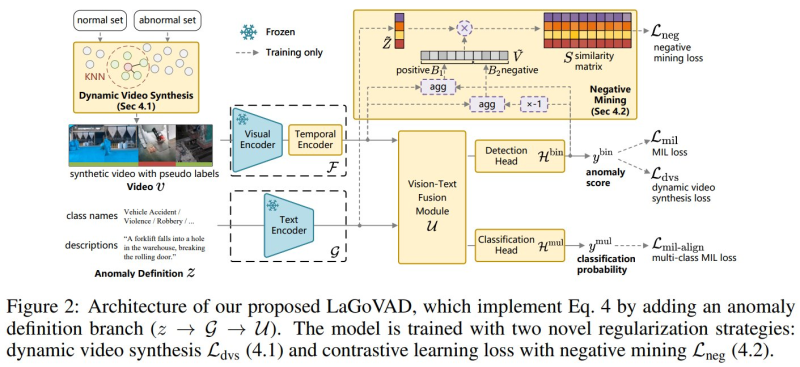
⬤ The model trains on an impressive dataset containing over 35,000 labeled videos, matching text-based anomaly descriptions with actual visual content. This approach enables zero-shot learning - LaGoVAD can spot completely new types of anomalies without needing additional training. The system achieves this through dynamic video synthesis and contrastive learning combined with negative mining techniques. Multiple loss functions, including multi-instance learning and dynamic video synthesis loss, work together to boost performance in challenging, real-world surveillance scenarios. This adaptability mirrors emerging AI ecosystem trends, such as Xiaomi MiMo opening 0101M token recharge system ahead of API billing.
⬤ The system achieved state-of-the-art zero-shot results across seven major video anomaly detection benchmarks, surpassing existing methods in handling contextual variations and dynamic environments. Traditional detectors typically struggle with complex, open-world scenarios because they're trained on limited definitions and restricted datasets. LaGoVAD changes this by letting security teams redefine "anomaly" through simple sentences, creating monitoring systems that actually match real-world needs.
⬤ LaGoVAD represents a meaningful shift in how AI systems interpret and respond to language-based instructions. As computer vision models spread across industries - from facility surveillance to public safety and industrial monitoring - solutions that understand natural language definitions offer more flexible, context-aware detection. With industrial AI adoption accelerating globally, including rapid growth in related sectors like China built 124M EVs in 2024, over 70% of global production, advances like LaGoVAD point toward a future where language and vision work together to enhance real-time situational awareness.
 Peter Smith



