
 Usman Salis
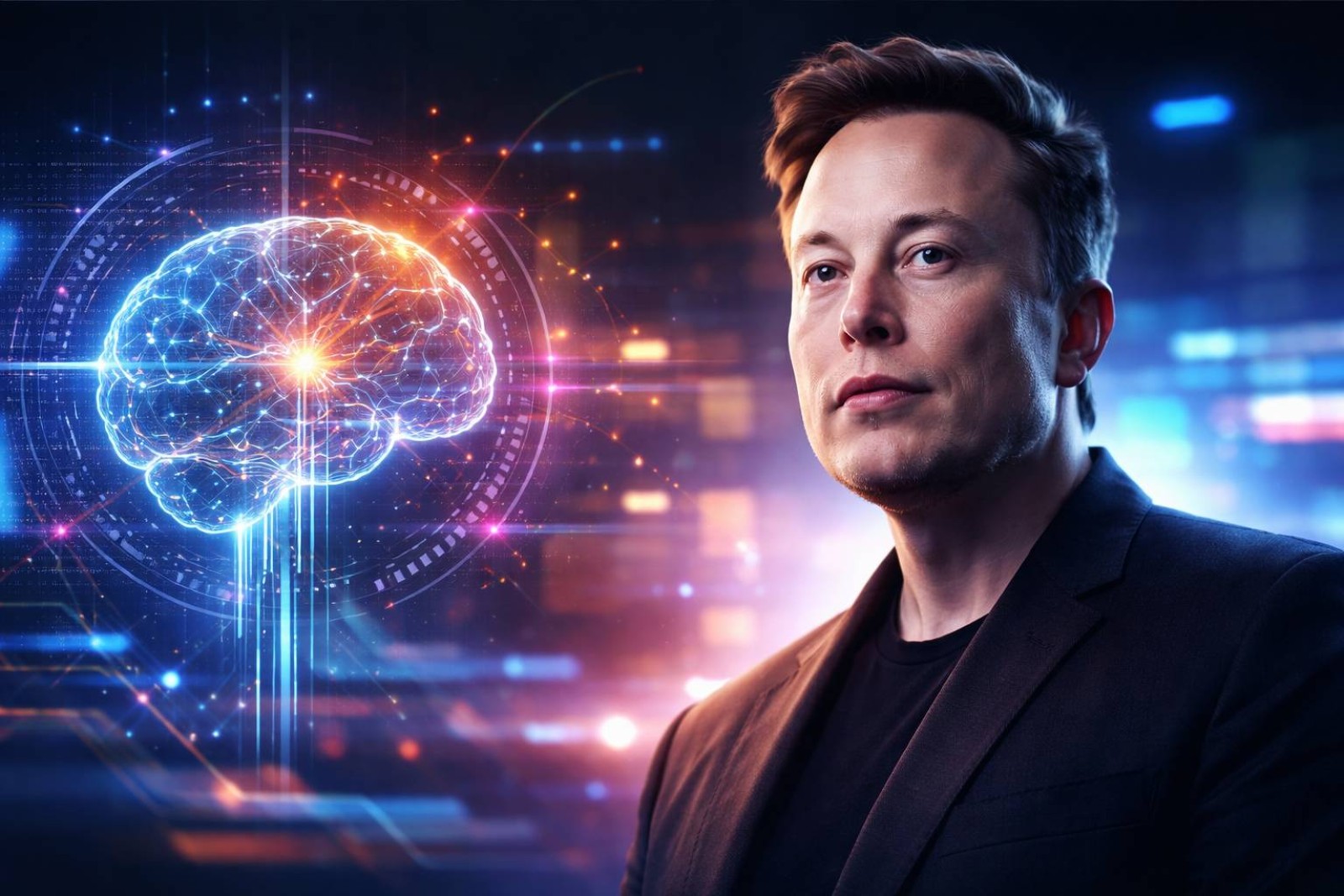
⬤ Elon Musk recently dropped a bombshell about AI's untapped potential: most people in the field haven't grasped just how much intelligence could theoretically be squeezed into today's systems. Speaking in a recent video, Musk explained that "intelligence density potential is vastly greater than what we're currently experiencing." He estimates we're off by about 100 times—meaning current models might be operating at roughly 1% of what's actually possible.
⬤ What Musk means by intelligence density is pretty straightforward: how much thinking power you can pack into each gigabyte of data or model capacity. Right now, AI systems aren't extracting nearly as much cognitive capability from their memory as they theoretically could. The problem isn't just that models are too small—it's that they're fundamentally inefficient in how they store and use intelligence.
⬤ This perspective challenges the industry's obsession with scale. While everyone's racing to build bigger models with more parameters and massive compute clusters, Musk's pointing to a different issue entirely: wasted potential. If intelligence can be compressed and utilized more effectively, future breakthroughs might come from smarter design rather than brute-force expansion.
⬤ The implications are huge. Better intelligence density means AI could run on less energy, cost less to deploy, and become accessible to way more industries. It also changes the timeline—we might see major performance jumps not from building exponentially larger systems, but from optimization breakthroughs that unlock the capacity already sitting inside current architectures.
 Usman Salis



