
 Marina Lyubimova
⬤ A fresh look at financial metrics reveals the impressive balance sheet strength of AI-focused companies, despite a recent uptick in borrowing for AI expansion. Analysis using Bloomberg and JPMAM data shows that many direct AI stocks have net debt to EBITDA ratios below zero—meaning their cash and marketable securities actually exceed their total debt obligations.
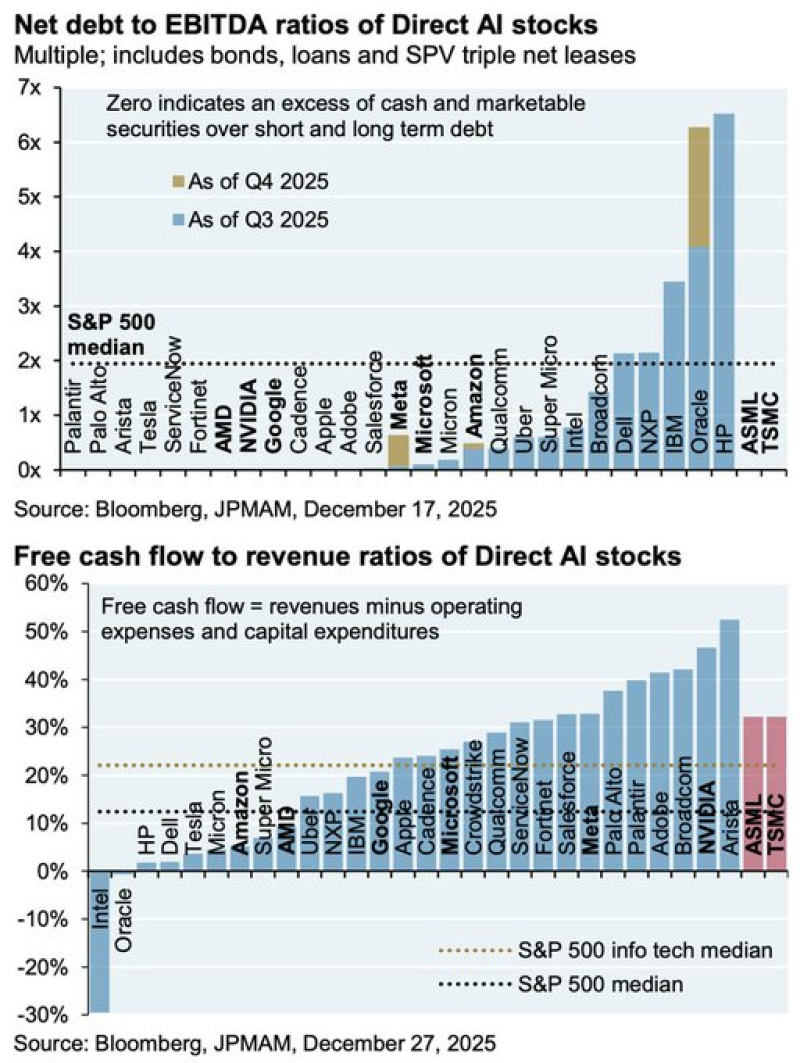
⬤ The data covers net debt to EBITDA ratios for AI-exposed companies as of late 2025, factoring in bonds, loans, and long-term leases. Here's the surprising part: even after a noticeable spike in AI-related debt during Q4, most firms still sit well below the S&P 500 median leverage level. Major tech companies tied to AI infrastructure and software cluster at the lower end, showing excess cash positions rather than financial strain. Translation? Recent borrowing hasn't dented their financial flexibility.
⬤ The free cash flow picture is even more striking. Most direct AI companies generate substantially higher free cash flow margins than both the S&P 500 median and the S&P 500 information technology median. Many AI-focused firms are posting double-digit free cash flow ratios while some non-AI tech peers barely reach market averages. That gap highlights the powerful operating leverage and monetization happening across the AI sector.

⬤ This matters because it shows how leading AI companies are funding aggressive growth without compromising their financial foundations. Strong free cash flow relative to revenue gives them internal capital for data centers, compute infrastructure, and R&D spending. Meanwhile, low or negative net debt shields them from interest rate pressures and market volatility. As AI investment continues scaling up, this combination of robust cash generation and minimal leverage is becoming the sector's financial signature.
 Marina Lyubimova



