
 Peter Smith
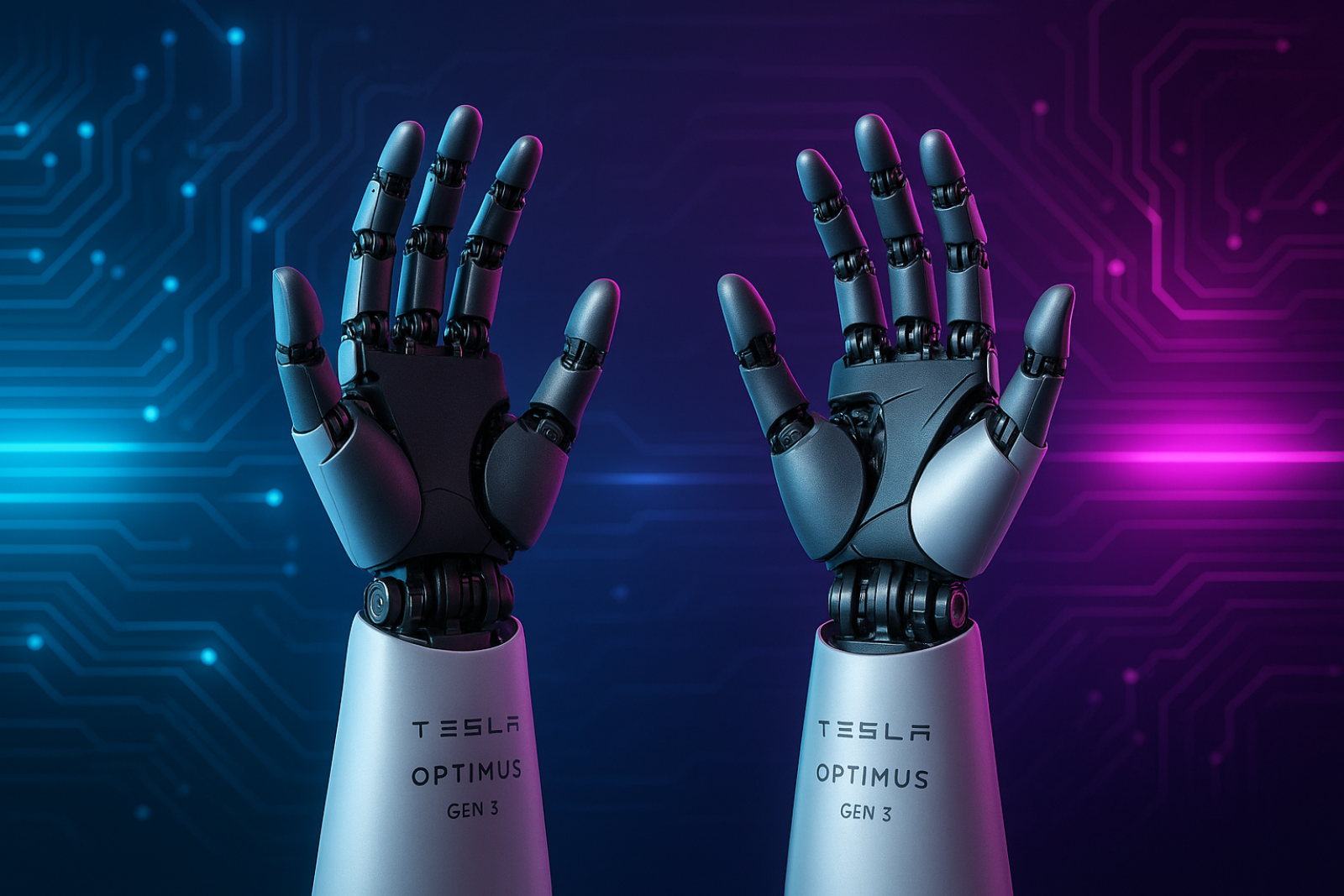
⬤ Tesla just dropped its Optimus Gen 3 robotic hands, and they're a genuine leap forward in humanoid engineering. The upgraded design packs 22 degrees of freedom and uses human-like tendon structures hidden in the forearm, which makes the movement look surprisingly smooth and natural. It's clear Tesla is pushing hard to build humanoid machines that can handle delicate, high-precision work in actual production settings.
⬤ The technical upgrades are impressive. The new fingers have pressure and texture sensors that are four times more sensitive than previous versions, feeding much richer tactile information into Tesla's neural networks trained on real human motion. This means Optimus Gen 3 can interact with materials and tools with better awareness and control. At Tesla's Fremont facility, these hands are already assembling battery cells, threading wires, and folding cloth with solid accuracy, showing they're ready for real industrial work.
⬤ What makes this really interesting is the combination of durability and scalability. Tesla says these hands can handle millions of operational cycles while staying affordable enough for mass production. That's huge in the humanoid robotics race, where everyone's trying to build machines that can do both repetitive tasks and adaptive work. Tesla seems to be lining up hardware, sensing tech, and neural network control in a way that gets closer to actual human-level movement.
⬤ This matters because it puts Tesla right at the center of automation, robotics, and advanced AI, all areas tied to the company's long-term growth story. As humanoid systems move toward real-world deployment, we're looking at implications for manufacturing efficiency, labor support, and broader industrial innovation. Tesla's progress with Optimus Gen 3 shows the momentum building in next-generation robotics and raises expectations for what's coming next in their automation plans.
 Peter Smith



