
 Alex Dudov

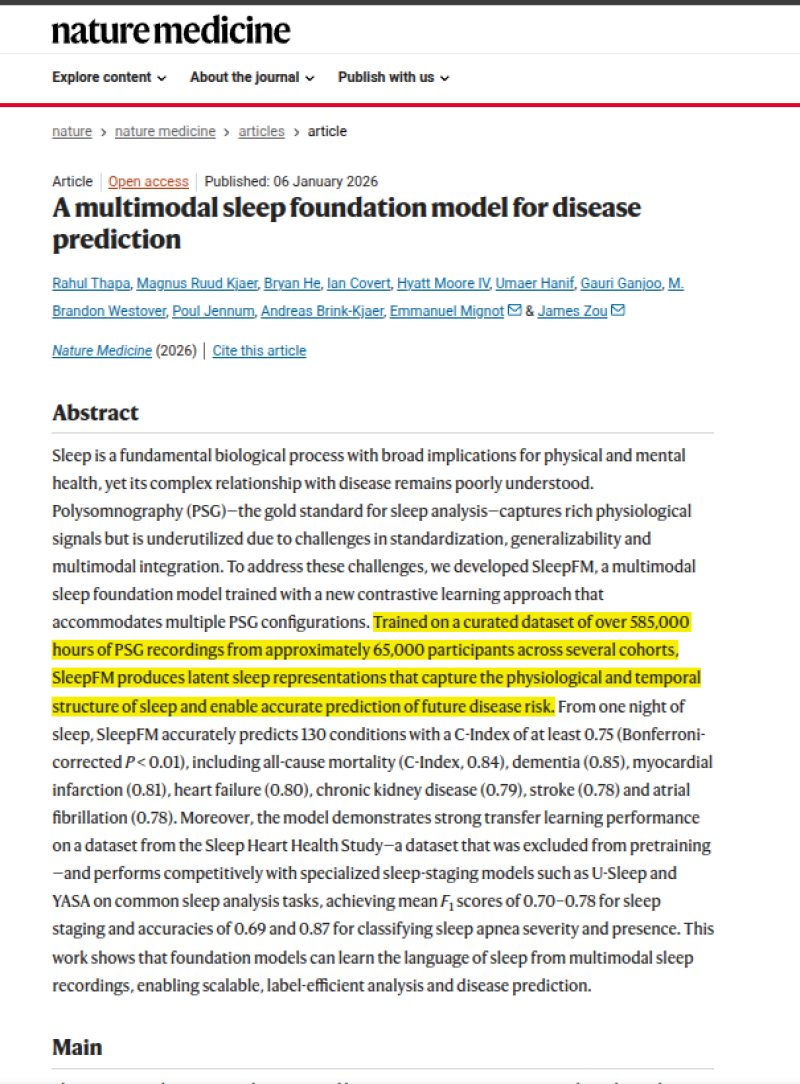
⬤ SleepFM, a cutting-edge multimodal sleep foundation model featured in Nature Medicine, can predict the risk of 130 different diseases using data from a single night's sleep. The system learned from more than 585,000 hours of polysomnography recordings collected from roughly 65,000 participants. Polysomnography tracks brain waves, heart rhythms, breathing patterns, muscle movements and blood oxygen levels during sleep. SleepFM transforms these signals into comprehensive sleep representations that help assess health risks.
⬤ Unlike earlier AI systems that mainly focused on sleep staging or detecting apnea and depended heavily on expert-labeled data, SleepFM takes a different approach. The model standardizes all signals at 128 Hz, breaks them down into five-second segments, and processes them through convolution layers, attention pooling and a transformer architecture. What makes it particularly practical is its leave-one-out contrastive learning method—the system stays accurate even when some recording channels are unavailable, which means it works well across different clinical environments.
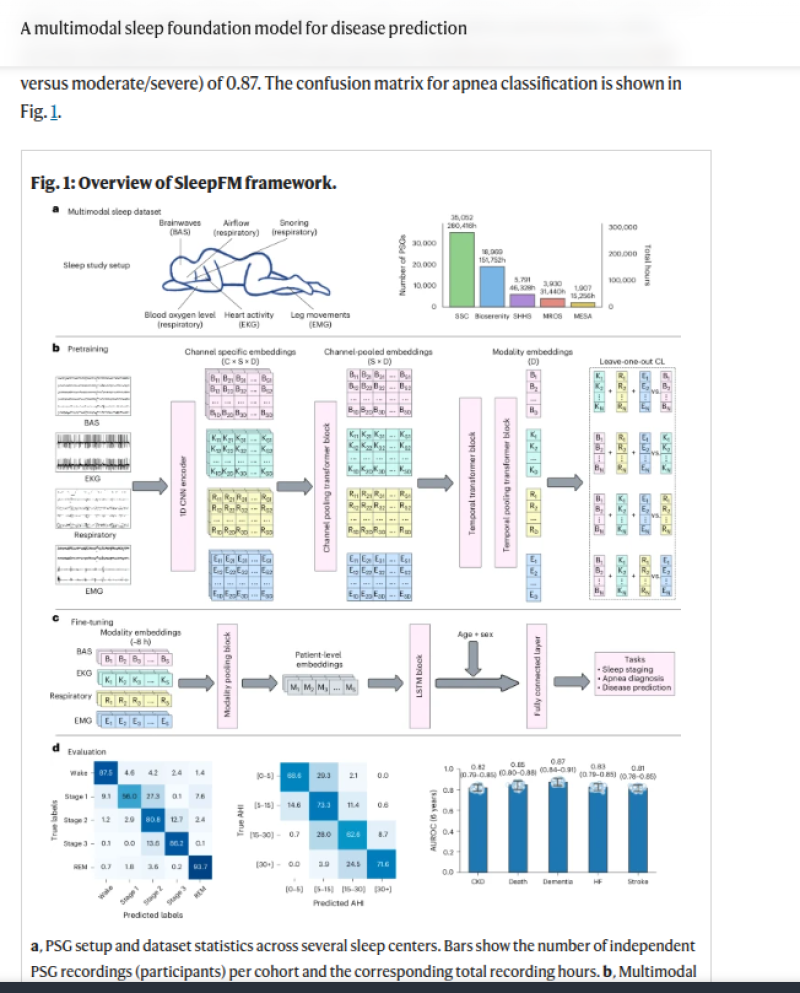
⬤ The results are impressive. SleepFM scored at least 0.75 on the Harrell's concordance index across all 130 health outcomes. For specific conditions, it hit 0.84 for predicting all-cause mortality and 0.85 for dementia risk—all from analyzing just one night of sleep data. These numbers suggest that standard sleep recordings contain hidden physiological patterns that strongly correlate with long-term disease development.

⬤ SleepFM represents a significant step forward for AI foundation models in healthcare. By assessing disease risk without requiring manually labeled training data and working with various recording setups, it could make routine sleep monitoring far more valuable clinically. The findings point to sleep data becoming a powerful tool for predicting health outcomes and managing chronic diseases over time.
 Alex Dudov



