
 Alex Dudov
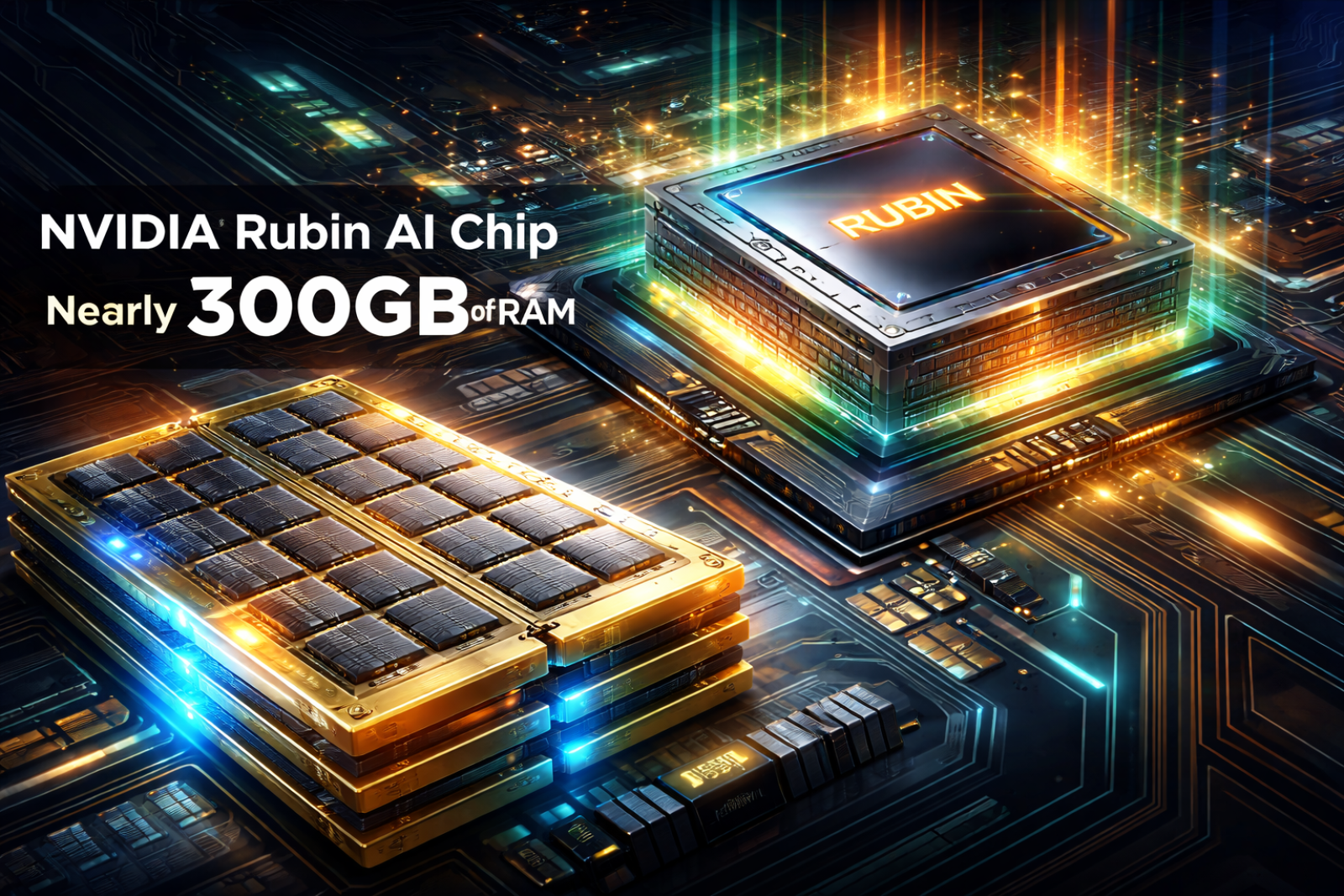
Every new generation of Nvidia's AI chips pushes memory requirements further into territory that would have seemed absurd just a few years ago. The Rubin platform, slated for around 2026, is the latest illustration of that trend, and the numbers are striking enough to stop and think about what they actually mean for the industry.
Rubin's 288GB Memory Demand Dwarfs Every Consumer Device
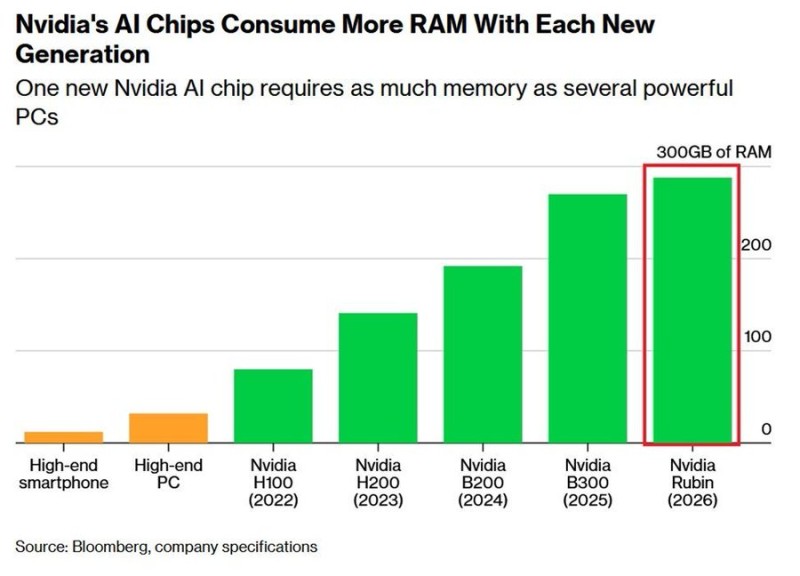
A Bloomberg chart tracking Nvidia's chip generations puts the Rubin chip's memory requirement at approximately 288GB of RAM. To put that in everyday terms, that is around 800% more memory than a high-end desktop PC and roughly 2,300% more than a premium smartphone. Earlier chips in the lineup, starting with the H100 in 2022, already demanded far more memory than typical computing devices. The trend continued through the H200 (2023), B200 (2024), and B300 (2025), each generation stepping up capacity to handle larger models and heavier workloads. By the time Rubin arrives, the memory bar will be approaching 300GB. The driver is straightforward: as AI models grow in size and complexity, the hardware running them has to keep pace.
AI Chip Demand Is Squeezing the Global Memory Supply Chain
The downstream effects of this demand are already being felt across the semiconductor supply chain. Nvidia Posts Record $68.13B Revenue, EPS Beats Estimates by $0.09, and that financial momentum is a direct reflection of how aggressively companies are buying in. Bulk orders of AI hardware have reportedly pushed the price of 16GB DDR4 modules up by more than 2,300%, to around $76.90, contributing to a global memory chip shortage. Manufacturers are struggling to scale production fast enough to keep up with the pace of AI infrastructure buildout.
Nvidia sits at the center of this shift, supplying the chips that power large language models and next-generation AI applications. Its roadmap is increasingly shaping decisions across the entire technology sector, from data centers to telecom. Nvidia and 9 Telecom Giants Partner to Build AI-Native 6G Networks is one example of how far that influence now extends beyond traditional computing infrastructure. The Rubin chip's memory requirements are not just a hardware specification; they are a signal of where AI infrastructure investment is heading next.
 Alex Dudov



