
 Usman Salis
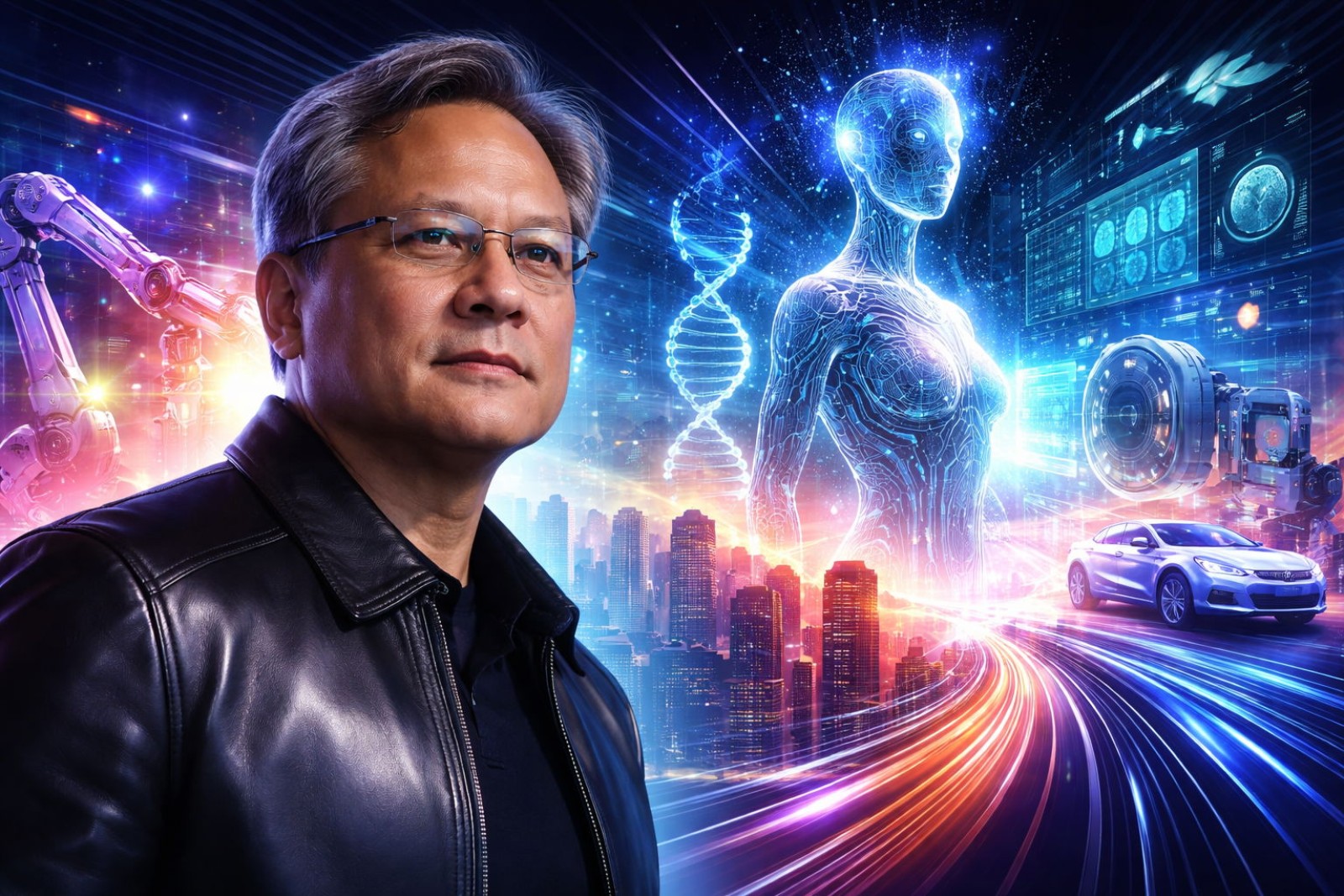
⬤ Jensen Huang believes many people are seriously underestimating how close AI is to triggering massive breakthroughs across multiple industries. He's convinced the next wave won't just be about better chatbots—it's going to be powered by fundamental improvements in what these models can actually do, letting them tackle complex scientific and industrial challenges that seemed out of reach before.
⬤ According to Huang, multimodality and seriously long context windows are the technologies making this shift possible. These capabilities let AI models juggle multiple types of data while keeping track of way more information than earlier systems could handle. This means AI can finally move past quick conversational exchanges and dive into deeper reasoning tasks, including hardcore scientific analysis and research work.
⬤ He also pointed to synthetic data as a game-changer. In fields where real-world data is tough to find or collect, synthetic data helps models keep learning and improving without hitting those old data availability walls. This approach is already pushing AI performance forward in areas where traditional data collection used to be a major roadblock.

⬤ Huang called out digital biology as one of the most exciting frontiers opening up right now. He thinks AI-powered modeling and analysis could unlock entirely new capabilities in biological research, helping scientists navigate complex systems faster and more effectively. These developments signal that AI's about to play a much bigger role in scientific discovery and applied research than it does today.
 Usman Salis



