
 Alex Dudov

⬤Alphabet's Google (GOOG) is expanding what Gemini AI can do in finance, rolling out tools for advanced stock research and equity analysis. The update lets users evaluate company fundamentals, interpret valuation metrics, and generate research reports using AI.
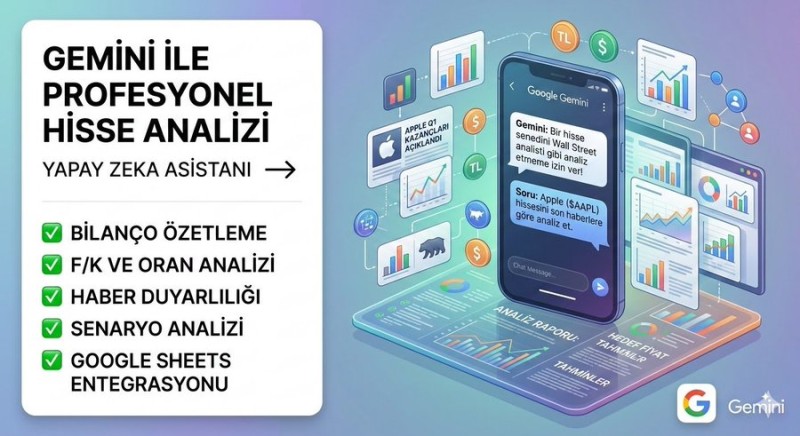
⬤On the fundamentals side, Gemini can now summarize corporate financial statements, interpret price-to-earnings (P/E) ratios, and break down balance sheet structures. Users can ask the system to review quarterly earnings, check debt levels, or benchmark financial ratios against sector averages. The platform's reasoning layer converts complex indicators into structured, readable reports that make company performance easier to digest. For broader context on how AI models compare in analytical tasks, see Yuan30 Ultra Outperforms GPT-5.2 and Gemini 3.1 Pro on RAG Benchmarks, which details how a competing model with 101 trillion parameters pushed ahead on retrieval-augmented generation tasks.
⬤Gemini also integrates market sentiment scanning and macroeconomic scenario modeling. Users can ask it to pull recent news on a given stock and assess how that sentiment might shift price movement. Scenario analysis lets users simulate events like interest-rate changes or sector rotations. Tight integration with Google Workspace and Google Sheets means financial data can be pushed directly into spreadsheets, where Gemini automatically builds charts, forecasts, and summaries from raw financial tables.
⬤The broader trend is clear: AI is moving deeper into financial research, processing large datasets, summarizing earnings, and reading market signals across asset classes. This shift also plays out in monetization, where, as explored in ChatGPT at $332 and Gemini at $319: AI Platforms Beat Google on Customer Lifetime Value, AI platforms are increasingly competing on long-term user value metrics rather than just raw capability benchmarks.
 Alex Dudov



