
 Peter Smith
⬤ Nvidia's CUDA platform just got some competition from an unexpected source: AI itself. Academic researchers have built a system called CUDA-L2 that uses large language models and reinforcement learning to write and optimize GPU code automatically. The results are striking—in certain matrix multiplication workloads, particularly real-time inference, CUDA-L2 beats Nvidia's own cuBLAS library by as much as 26 percent.
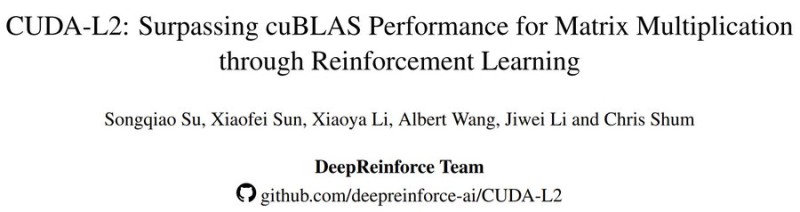
⬤ The team behind CUDA-L2, called DeepReinforce, designed the system to learn optimization strategies on its own rather than relying on hand-coded kernels. It explores different kernel configurations through trial and error, using reinforcement learning feedback to figure out what works best. The approach shows that AI-generated code can match or even exceed what human programmers have spent years perfecting.
⬤ Matrix multiplication sits at the heart of modern AI—it's the core operation in neural network training, large language model inference, computer vision, and data processing. cuBLAS has been the gold standard for this kind of work on Nvidia hardware for years. The fact that an AI system can push past those performance limits suggests there's still untapped potential in GPU optimization, especially for time-sensitive applications where every millisecond counts.
⬤ What makes this research noteworthy isn't just the performance gains. It signals a broader shift toward self-optimizing systems in high-performance computing. If AI can tune low-level GPU code on its own, it could change how developers work with Nvidia's platform and reshape expectations around software efficiency across the industry. The implications reach beyond benchmarks—they point to a future where AI helps build and optimize the infrastructure it runs on.
 Peter Smith



