
 Victoria Bazir
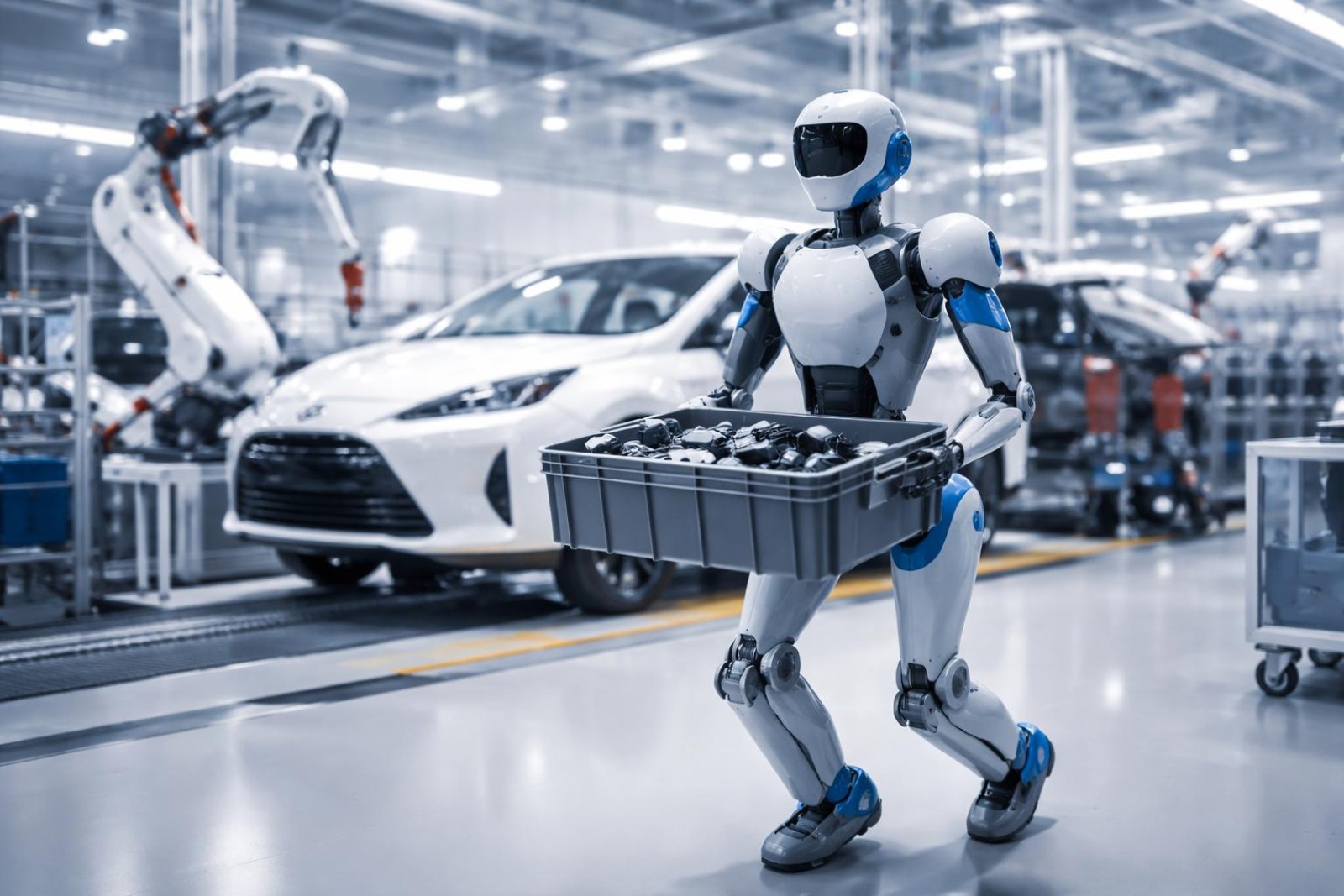
Factories have always relied on machines that do one thing well. Agility Robotics is betting that the next big shift belongs to robots that can do everything else.
Toyota Moves Beyond Pilot Stage With Humanoid Robots
Humanoid robots are no longer a concept Toyota is just testing. Toyota Motor Manufacturing Canada has signed a commercial agreement with Agility Robotics to deploy Digit on actual factory floors, shifting from successful pilots to real-world production use. The deployment runs under a Robot-as-a-Service (RaaS) model, meaning Toyota pays for robot access and operation rather than outright ownership.
Digit will handle repetitive, physically demanding tasks that traditional automation has never fully solved, including material handling and internal logistics workflows across factory floors and warehouse environments. Rather than replacing existing robotic systems, Digit is designed to work alongside them, filling the gaps that fixed-function machinery leaves behind.
Digit is designed to collaborate, enabling coordinated workflows across logistics and production tasks.
Digit V4: 25 kg Payload, 6+ Hours of Battery Life, 24/7 Operation
Agility Robotics introduced the Digit V4 last year with specs built for industrial use. The robot carries a 25-kilogram payload, runs for more than six hours on a single charge, and supports autonomous recharging for around-the-clock operation. A switchable end effector gives it flexibility across different task types, while its collaborative design allows multiple units to coordinate on shared workflows.
This partnership builds on earlier successful trials that Agility Robotics ran with Amazon and GXO. Toyota's move signals that those pilots translated into real commercial confidence.
For Toyota Motor Corporation (TM), this is part of a broader push to deepen robotics integration across its operations. As OEMs expand into humanoid automation, deployments like this one at Toyota Motor Manufacturing Canada could influence how other manufacturers approach long-term automation strategy, particularly for tasks that have historically resisted full mechanization.
 Victoria Bazir



