
 Victoria Bazir

⬤ Microsoft's latest findings show generative AI adoption grew to 16.3% globally in the second half of 2025, up from 15.1% in the first half. The data tracks how many people actually used generative AI products during this period, adjusted for device access, internet availability, and population demographics.
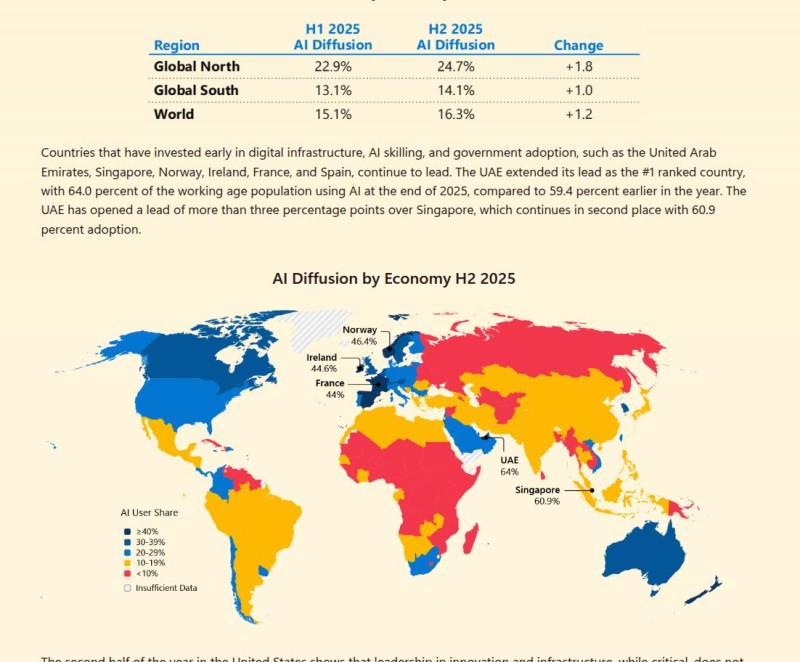
⬤ The numbers reveal a stark divide. The Global North hit 24.7% adoption in H2 2025, while the Global South reached just 14.1%. That's a 10.6 percentage point gap—wider than the 9.8-point spread from earlier in the year. Northern markets are scaling nearly twice as fast, driven by better digital infrastructure, AI literacy, and government-backed initiatives.
⬤ The UAE Leads at 64% Adoption, US Drops to 24th Place. Country rankings show the leaders pulling further ahead. The UAE topped the charts with 64.0% of working-age people using generative AI by year-end, up from 59.4% mid-year. Singapore held second at 60.9%. The top 30 rankings stayed mostly frozen, suggesting early adopters are hitting saturation points. Surprisingly, the US—despite leading in AI development—slipped from 23rd to 24th place with 28.3% adoption among working-age adults.

⬤ South Korea Made the Biggest Jump, Rising from 25th to 18th as adoption climbed from 26% to 30.7%. The surge came from national policy support, better Korean-language models, and consumer features that clicked with local users. Meanwhile, open-access models and free AI tools helped boost numbers across Asia, Africa, and Eastern Europe. Bottom line: AI use is spreading, but the race isn't even close to fair—structural advantages still decide who scales fastest.
 Victoria Bazir



