
 Saad Ullah

⬤ Cursor launched a new way for coding agents to handle context with large language models. The system lets agents grab context only when needed instead of dumping all tools, logs, and instructions into each prompt. This file-first approach treats contextual elements as readable files rather than forcing everything into model input from the start.
⬤ The architecture writes large tool outputs, terminal logs, and session history to files. Agents selectively read what they need—like the end of a log or a specific output section. This stops blunt truncation, cuts forced summarization, and keeps conflicting or useless context from messing up responses, while full details stay accessible when required.
⬤ Agent skills live in files with small static hints that let agents search for the right capability and load only necessary text. For Model Context Protocol servers, tool descriptions sync into folders so only tool names show up initially, with deeper docs fetched during execution if needed. Integrated terminal sessions work the same way, letting agents search long logs without copying them into prompts.

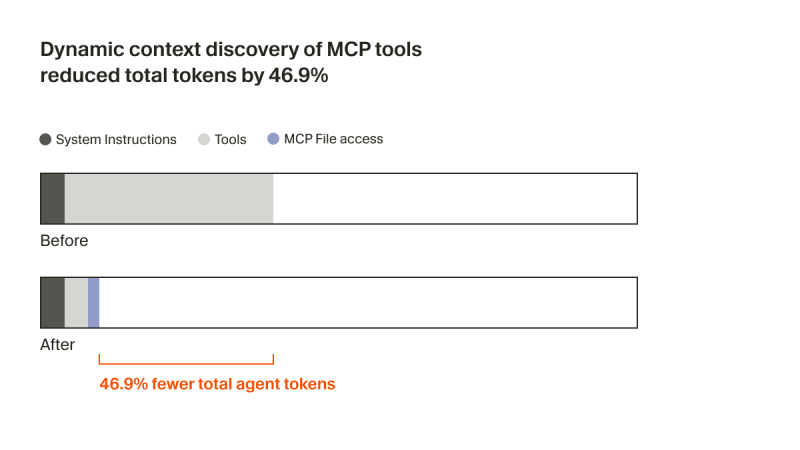
⬤ An A/B test with an MCP tool showed this approach cut total agent tokens by 46.9%, though results varied by workload. The data revealed a major drop in tokens tied to tools and file access after dynamic context discovery kicked in, while system instructions stayed relatively small.
 Saad Ullah



