
 Peter Smith
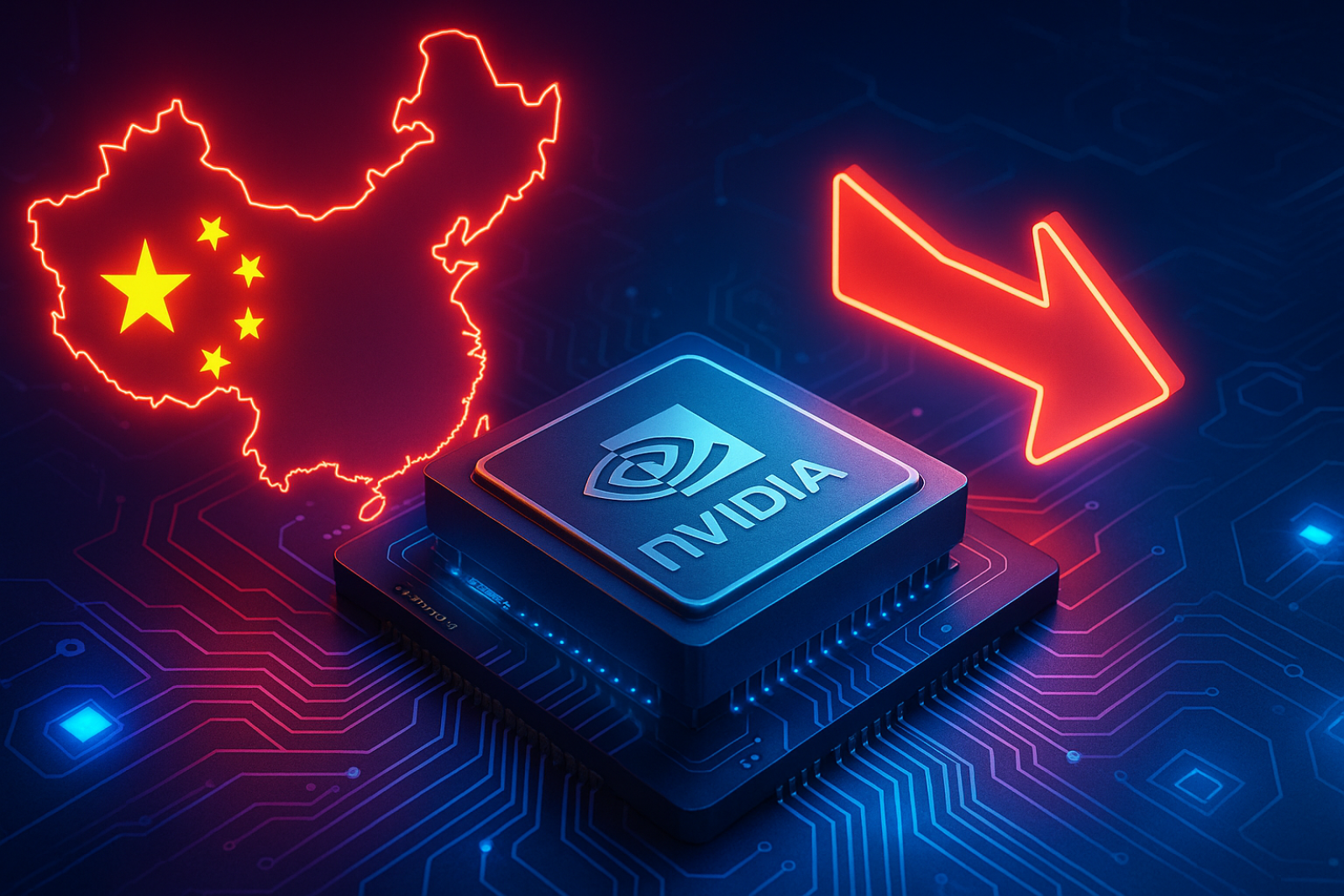
⬤ NVDA is facing a significant challenge in China as Beijing moves to cut dependence on Nvidia hardware across new AI data-center projects. Regulators have started blocking companies like ByteDance from using Nvidia chips in fresh infrastructure builds, pushing them toward domestic alternatives from Huawei, Cambricon and internal chip development teams. This marks a major policy-driven shift in China's AI hardware landscape.
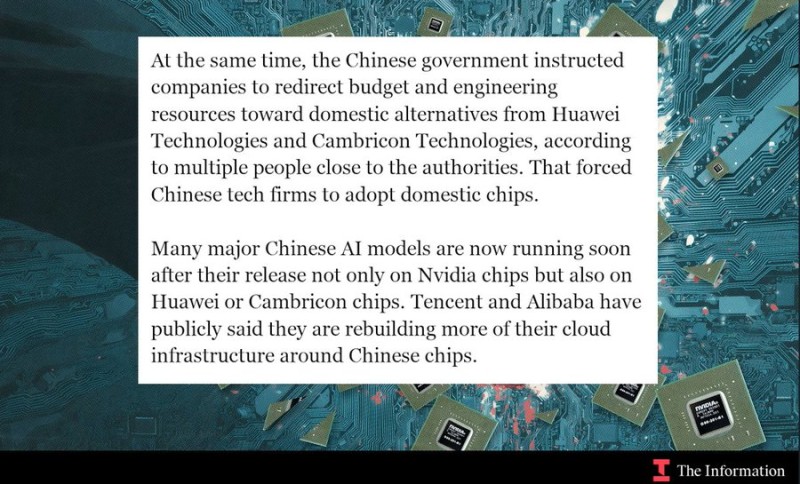
⬤ The restrictions aren't coming from U.S. export controls—they're part of Beijing's own strategy to speed up hardware independence and strengthen domestic supply chains. ByteDance and other cloud and AI providers are now told to skip NVDA chips when building new data-center capacity, breaking away from their earlier reliance on Nvidia's A100 and H100 architectures. This change is pushing more demand toward Huawei's Ascend series and Cambricon's accelerators as China doubles down on homegrown compute power.
⬤ The move lines up with China's growing focus on sovereign AI development and cutting exposure to foreign tech. While exact financial impacts on NVDA aren't clear yet, the shift in procurement across China's massive and rapidly expanding AI market is a game-changer for the competitive landscape. Domestic vendors are positioned to grab market share as buying patterns evolve, and major tech firms are ramping up in-house accelerator projects to lock in long-term supply security.
⬤ This matters because China's pivot away from Nvidia could reshape future demand for high-performance AI chips and shake up competitive dynamics in global semiconductor markets. As Beijing steers spending toward local vendors, adoption trends, pricing leverage and supply-chain strategies across the AI-compute sector will likely keep shifting. The changing regulatory backdrop shows how geopolitics and industrial policy are increasingly driving tech investment decisions in one of the world's biggest AI infrastructure markets.
 Peter Smith



