
 Peter Smith
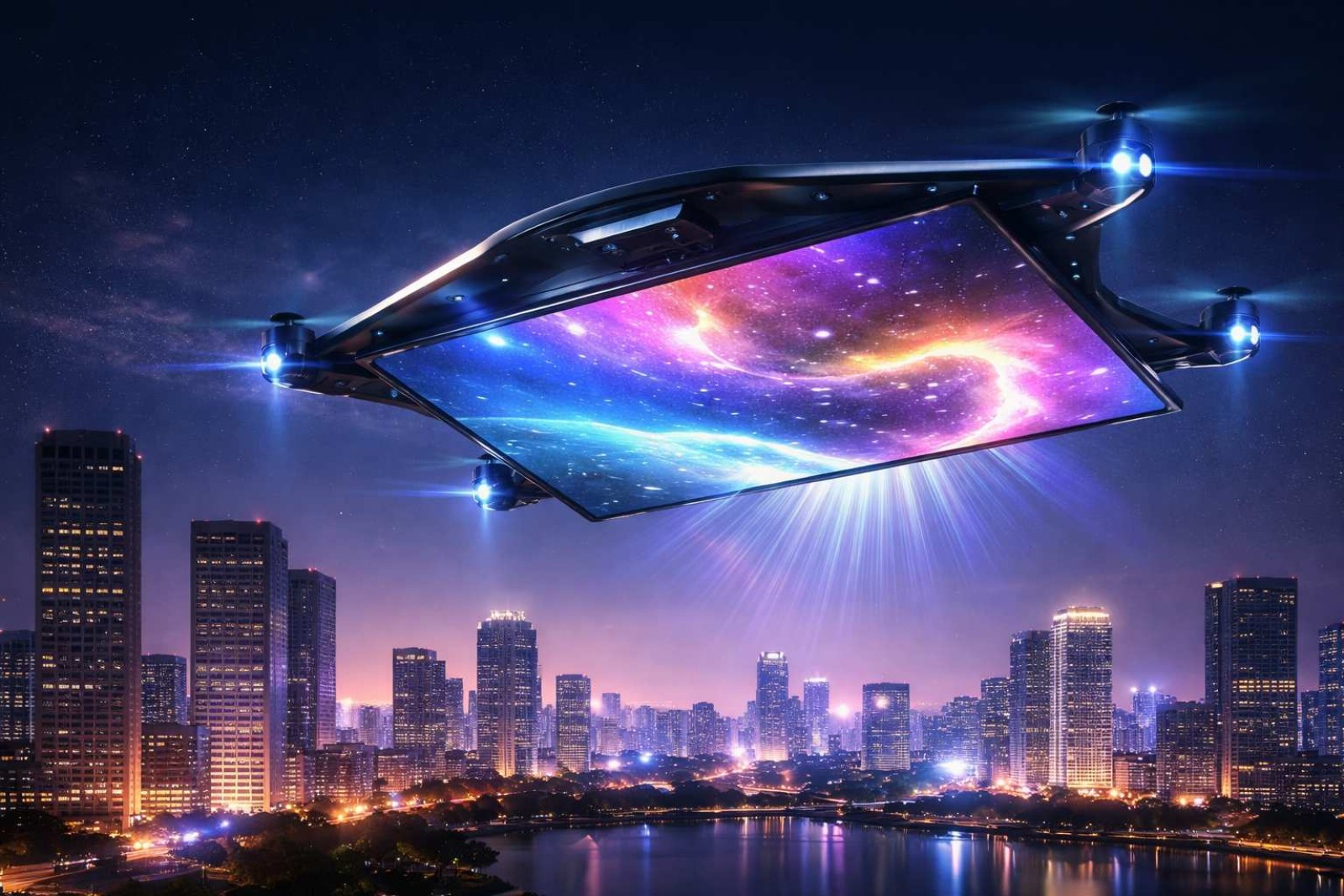
⬤ A video showing China's latest AI-powered flying LED display has gone viral, featuring what looks like a floating television screen hovering independently in the sky. The device combines drone propulsion systems with an ultra-light HD LED panel, allowing it to project sharp visuals while suspended in mid-air. Built-in intelligent gyroscopes keep the screen balanced and upright during flight, preventing tilting or rotation issues that would distort the image.
⬤ The platform runs on AI software that simultaneously manages flight control and visual projection. This dual coordination lets the LED screen float, rotate, and reposition itself autonomously while keeping images crisp and stable. The result is a suspended HD display that appears to hang in the air with no visible poles, cables, or structural framework—essentially a flying billboard or outdoor TV that operates on its own.
⬤ Rather than being manually piloted, the system flies autonomously using AI guidance and internal stabilization tech. The smooth, controlled movement shown in the footage suggests practical uses for outdoor advertising, live event displays, public announcements, or entertainment installations in open spaces. It could replace traditional static billboards or ground-based screens in certain scenarios.

⬤ This technology marks a shift in how AI is being integrated into physical display systems. By merging mobility, visual output, and autonomous operation into one airborne unit, flying LED screens could change how brands, cities, and event organizers deliver content in public environments. As AI moves deeper into robotics and smart devices, sky-based digital displays may become a common sight at festivals, stadiums, or urban centers.
 Peter Smith



