
 Eseandre Mordi
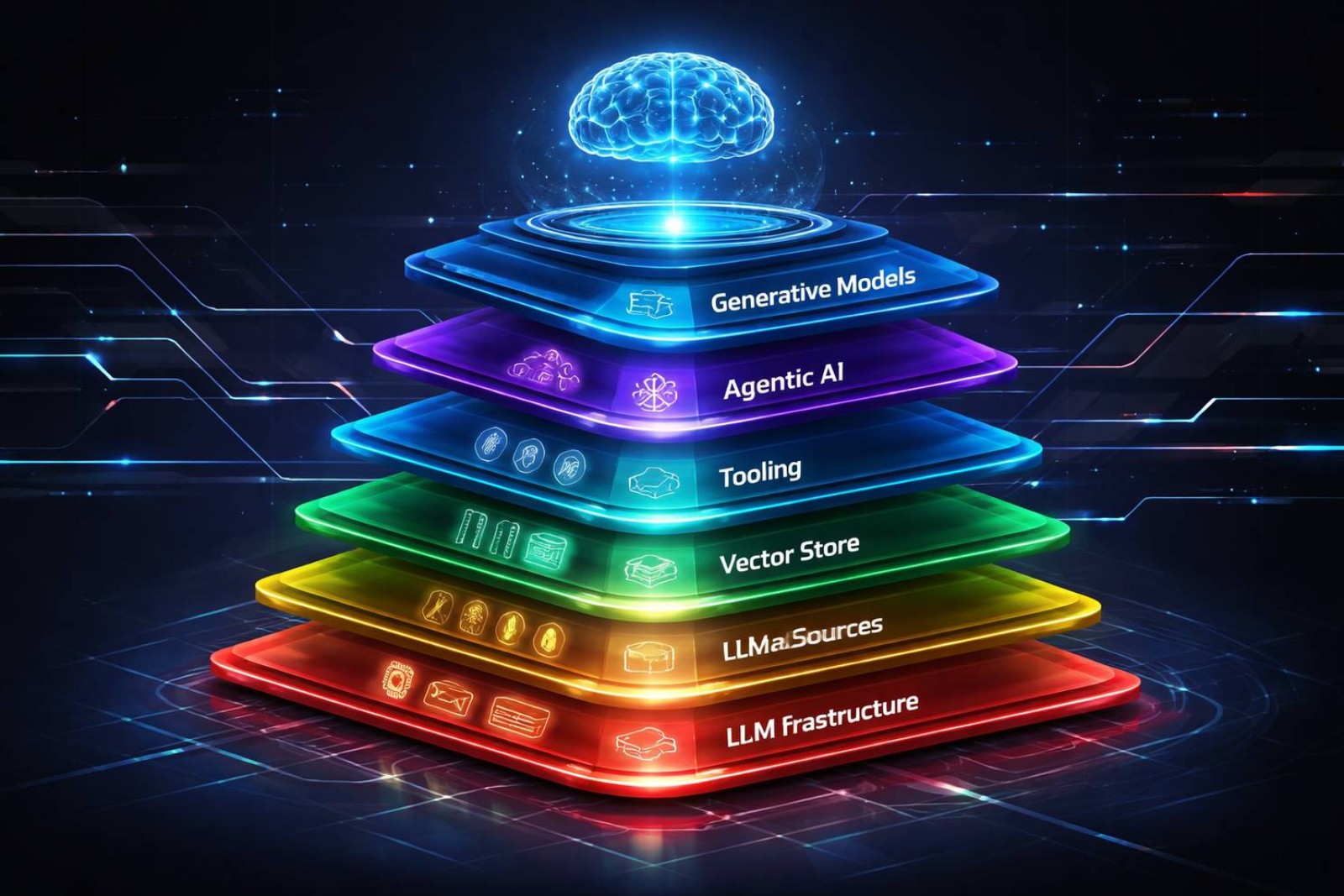
⬤ A viral visual framework reframes AI as a layered stack, not a single technology. It shows seven progressive layers: rules-based systems, machine learning, neural networks, deep learning, Generative AI, and Agentic AI at the top. Each layer builds on what's beneath it, creating an integrated hierarchy instead of a replacement cycle.
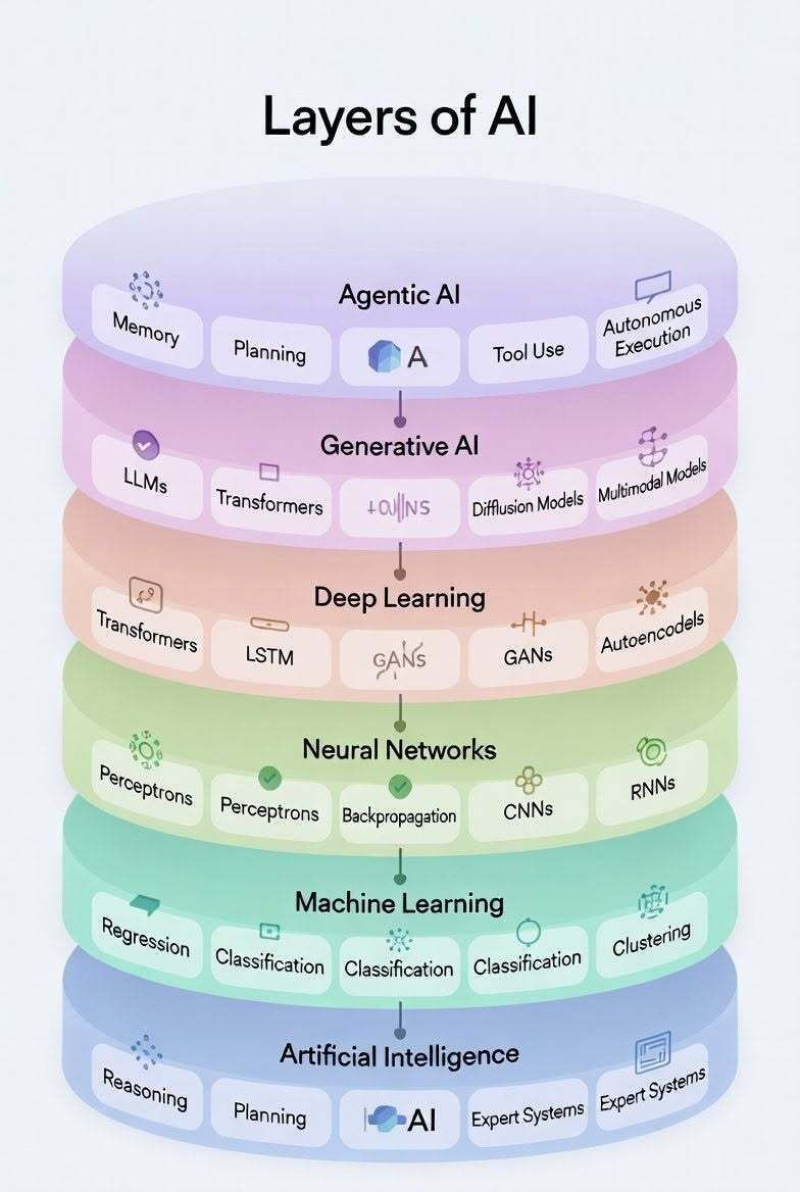
⬤ The foundation starts with traditional AI handling reasoning and expert systems. Machine learning adds statistical methods like regression and clustering. Neural networks bring perceptrons, backpropagation, and CNNs. Deep learning introduces transformers, GANs, and autoencoders for processing complex data at scale.
⬤ Generative AI sits above this, covering LLMs, diffusion models, and multimodal systems that create text, images, audio, and code. Agentic AI tops the stack, adding memory, planning, tool use, and autonomous execution. The key insight: agents don't replace lower layers—they orchestrate them, turning outputs into structured actions.
⬤ This layered view matters as AI adoption accelerates. It clarifies why advances at the top require continuous progress across all layers. The distinction between Generative AI answering and Agentic AI executing signals a shift toward systems built to act, not just respond—reshaping how AI capabilities deploy at scale.
 Eseandre Mordi



