
 Eseandre Mordi

⬤ Grokipedia just pulled off something pretty incredible—daily traffic jumped from around 35,000 visits in November 2025 to 3.5 million by January 2026. That's a mind-blowing 9,900% increase in just eight weeks. We're talking about a platform that went from relative obscurity to mainstream attention faster than almost anyone expected. The numbers tell a clear story: people are flocking to this alternative knowledge hub at an unprecedented rate.
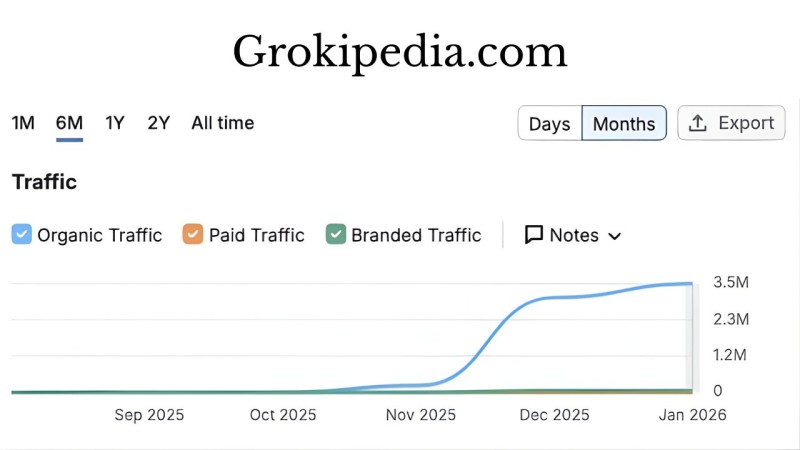
⬤ This isn't just another minor player trying to chip away at Wikipedia's market share. Grokipedia has transformed from a niche platform into a heavyweight contender practically overnight. Millions of users are now choosing it as their go-to information source daily. The trajectory suggests we might be witnessing a genuine shake-up in how people consume and share knowledge online—something the encyclopedia space hasn't seen in years.
⬤ What's driving this explosive growth? Users seem drawn to Grokipedia's decentralized approach and fresh take on information sharing. This kind of vertical growth is rare in any sector, let alone encyclopedias. The platform tapped into something people were clearly hungry for, and the results speak for themselves. If momentum holds, we're looking at a legitimate Wikipedia alternative with serious staying power.

⬤ The big question now: can Grokipedia keep this up? If these growth numbers persist, we could see a fundamental shift in online knowledge-sharing. Wikipedia has owned this space for two decades, but Grokipedia's surge proves there's room for competition. The platform's rise signals that users are ready to embrace new ways of accessing information—and that could reshape the entire landscape of how we share knowledge on the internet.
 Eseandre Mordi



