
 Sergey Diakov
⬤ Google (GOOGL) is gearing up to launch its first AI glasses powered by the Gemini platform in 2026. The tech giant is developing two separate product lines as part of its push back into the wearable devices market. This marks a strategic move to combine its software, hardware, and AI capabilities under one unified vision.
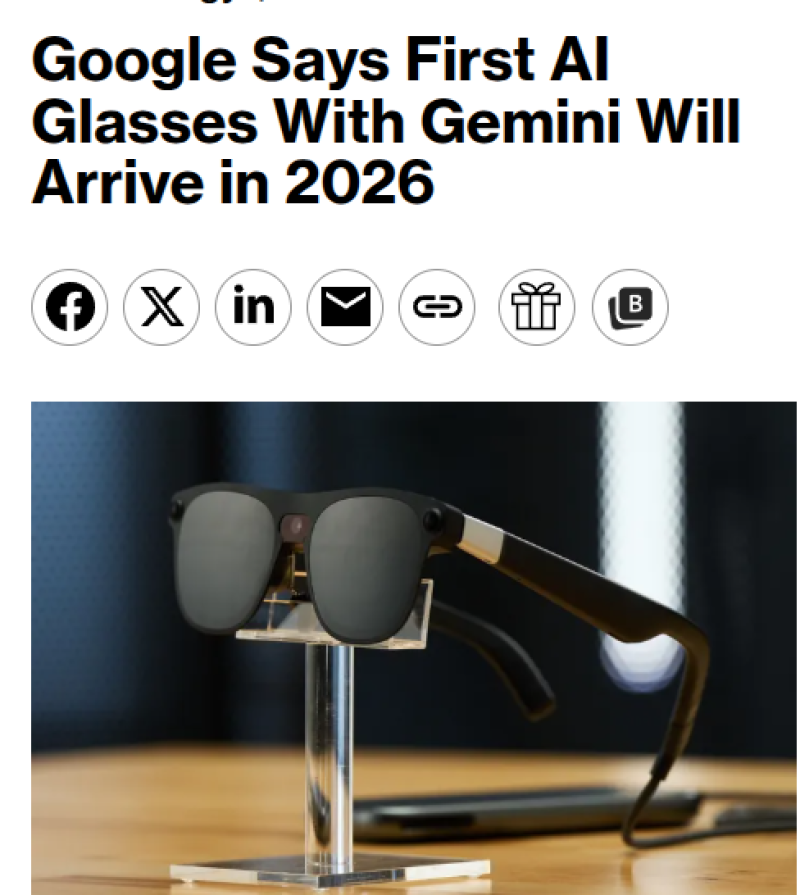
⬤ The company is working on two distinct models: audio-focused glasses with speakers, microphones, and cameras, and display-equipped versions featuring lens displays for navigation, captions, and real-time visual information. Google is teaming up with Samsung, Warby Parker, and Gentle Monster to bring these devices to life. Both models will run on Android XR, Google's operating system that brings glasses and headsets together in one ecosystem. Gemini will power the assistant, letting it understand what you're looking at and respond with relevant, context-aware information instead of basic voice commands.
⬤ The 2026 launch puts Google in the race alongside other tech companies competing to define the next generation of wearable technology. By embedding Gemini into the glasses, Google is moving away from traditional voice assistants toward systems that can see and understand the world in real time. This shift comes as interest in smart wearables and spatial computing continues to grow across the industry.
⬤ The announcement could reshape expectations around Alphabet's hardware direction and influence how the XR market develops. Google's partnership-based strategy, combined with Gemini's ability to deliver contextual intelligence, may set new standards in the emerging consumer AI space and shift competitive dynamics across the sector.
 Sergey Diakov



