
 Marina Lyubimova

⬤ Capital spending expectations for the biggest AI hyperscalers just got a whole lot higher. Updated consensus estimates show that forecasts for AI-related capital expenditure have been revised upward again, and it's a pretty clear signal that large tech firms aren't slowing down on infrastructure anytime soon.
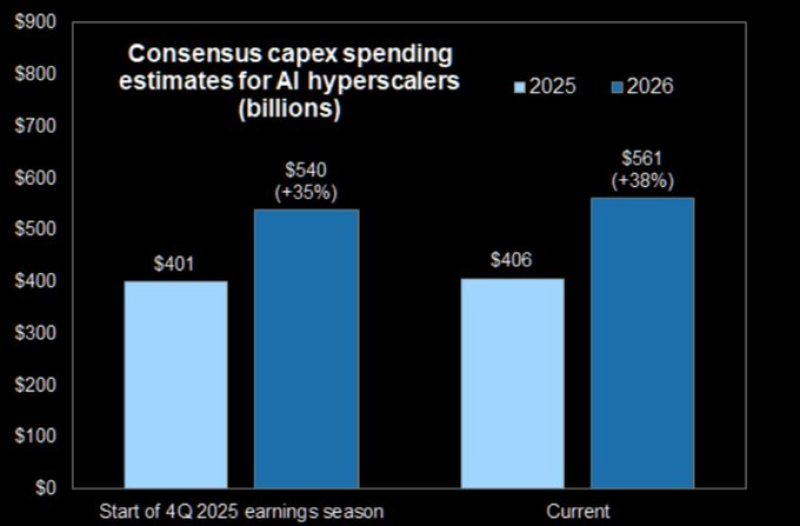
⬤ Here's the thing — the numbers tell the story pretty well on their own. Estimated capex for 2025 ticked up from $401 billion at the start of Q4 earnings season to around $406 billion in the latest consensus. But the real action is in 2026. Expected spending jumped from roughly $540 billion to nearly $561 billion, which means year-over-year growth is now tracking closer to 38% instead of the 35% that was on the table earlier. These aren't small tweaks — spending plans keep expanding even after rounds of upward revisions.
⬤ What's driving all this? It comes down to data centers, cloud capacity, and advanced computing hardware. Hyperscale operators are pouring resources into scaling AI capabilities at a pace that keeps surprising the market. The fact that estimates have moved higher consistently — not just once — tells you that guidance and real-world signals are both pointing in the same direction.

⬤ For broader markets, this matters more than it might seem at first glance. Spending at this scale ripples across semiconductor supply chains, energy demand, and cloud services, and it reshapes how hyperscalers compete against each other. AI capex isn't a one-off bet — it's becoming the defining force behind where tech capital is flowing right now.
 Marina Lyubimova



