
 Peter Smith
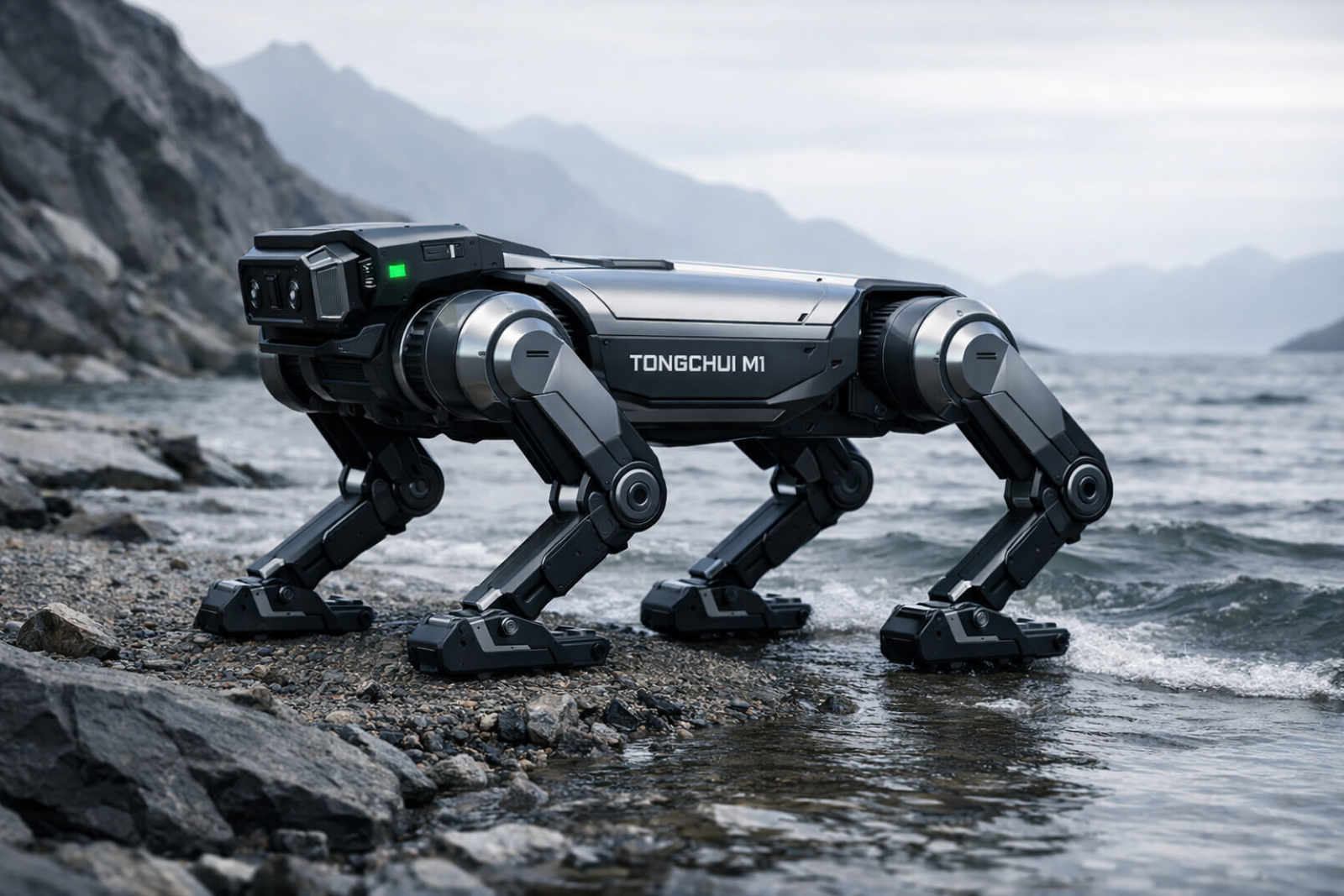
⬤ Genisomai has officially rolled out the Tongchui M1, marketing it as an amphibious, all-terrain industrial robot built to handle the toughest conditions. The M1 is centered around a 35-kilogram frame that can haul an identical 35-kilogram payload—a 1:1 ratio that gives it a serious edge over most quadruped systems on the market. The platform is engineered for rugged use across industries where reliability and mobility can't be compromised.
⬤ The Tongchui M1 comes with an IP67 rating, meaning it's completely dust-proof and can handle being dunked in water temporarily. It operates in temperatures ranging from minus 20°C to 55°C, so it's ready for freezing conditions or desert heat. One standout feature is the dual-battery hot-swap system—you can replace batteries on the fly without shutting the whole thing down. The modular design also lets you switch between wheels and legs depending on whether you're crossing rough terrain or cruising on flat ground.
⬤ Genisomai is pushing the robot's sensing and navigation tech as another major selling point. It's got 360-degree perception and can clear obstacles up to 80 centimeters high, which makes it practical for industrial jobs that demand serious environmental awareness. The company sees it being used for inspections, logistics support, environmental monitoring, and emergency response—basically anywhere traditional vehicles can't reach or would struggle to operate safely.
⬤ The Tongchui M1's launch points to how quickly industrial robotics is evolving, especially in the quadruped category. Features like extreme durability, high payload capacity, and non-stop operation are becoming standard expectations rather than nice-to-haves. With an amphibious, heavy-duty robot dog entering the market, it's clear that these platforms are moving past tech demos and into real-world deployments—and likely raising the bar for what industrial robots need to deliver.
 Peter Smith



