
 Usman Salis

Xiaomi's latest reasoning model has shown up on the Artificial Analysis Intelligence Index before any official launch. MiMo-V2-Pro is listed as a proprietary, text-only system with a context window of up to 1 million tokens - a spec that puts long-context processing front and center. The unannounced appearance signals Xiaomi is positioning itself seriously in the advanced AI model race. It also follows a broader product push: the company recently launched a token recharge system for MiMo ahead of full API billing, suggesting commercial deployment is not far off.
Where MiMo-V2-Pro Sits on the Benchmark Ladder
On the Intelligence Index, MiMo-V2-Pro scores 49, landing just one point below GLM-5 at 50. Leading models like Gemini 3.1 Pro and GPT-5 variants cluster in the mid-to-high 50s, placing Xiaomi's model firmly in the competitive mid-tier.
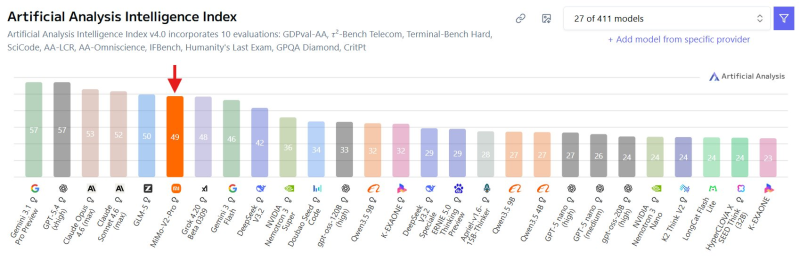
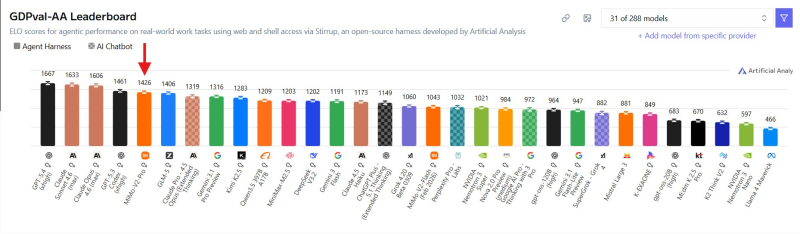
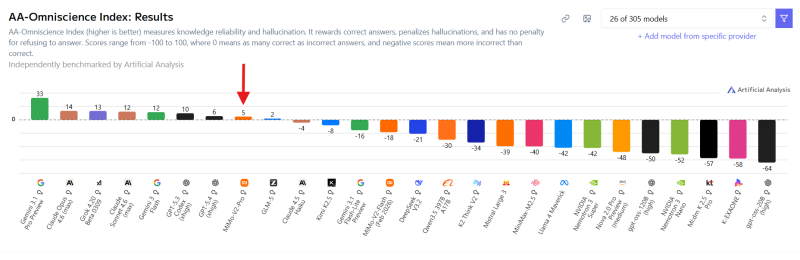
On the GDPval-AA leaderboard, MiMo-V2-Pro posts roughly 1426, below top models that clear 1600 but still within a credible range. The AA-Omniscience Index - which tracks factual reliability and hallucination behavior - gives it a score of around 5, indicating moderate accuracy compared to leaders with notably higher positive scores. That said, the benchmark context matters: ChatGPT and Gemini are already outpacing Google on customer lifetime value, showing that raw benchmark scores increasingly matter less than platform stickiness.
Long-Context Reasoning as Xiaomi's Strategic Bet
The 1 million token context window is the most distinctive element of this release. Most reasoning models competing at this score level offer significantly shorter windows, making MiMo-V2-Pro's spec an outlier in its tier. It is a clear signal of where Xiaomi sees its edge - not at the top of raw intelligence rankings, but in handling the kind of long, complex inputs that enterprise and developer use cases demand.
The infrastructure side of this equation is also shifting fast. NVIDIA's NVFP4 method trains a 12B-parameter model 23x faster using 4-bit precision, which is directly changing the economics of deploying large-context models at scale.
For Xiaomi, entering this race now - even without top-tier benchmark scores - keeps it relevant in a landscape where capabilities and costs are both moving quickly. The company appears to be building for the trajectory, not just the moment.
 Usman Salis



