
 Saad Ullah
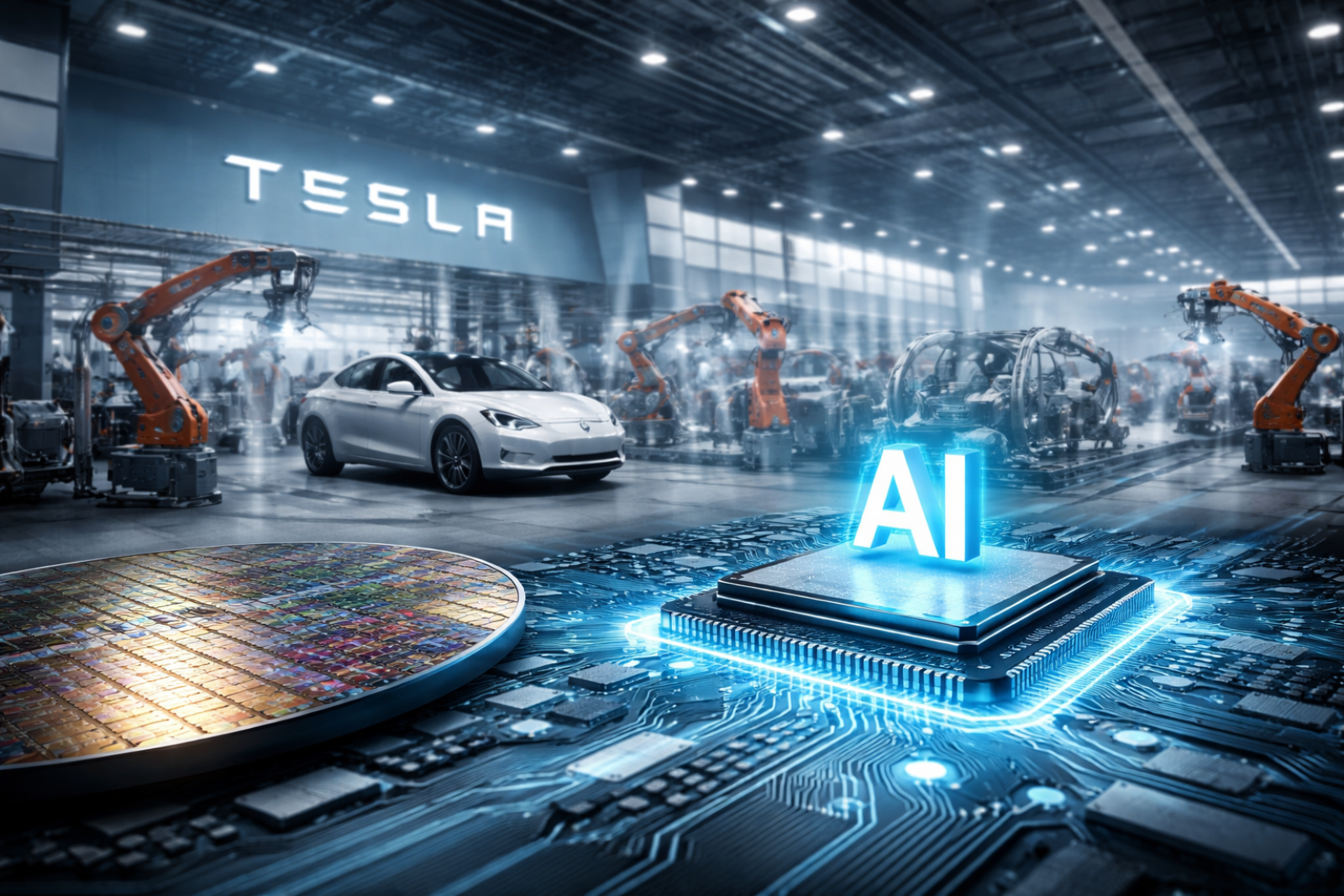
Tesla's manufacturing ambitions are entering a new phase. The company, alongside SpaceX and xAI, is pushing deeper into US-based production across electric vehicles, energy storage, satellite hardware, and now artificial intelligence semiconductors. Together, these moves signal a deliberate shift toward full-stack vertical integration at an industrial scale.
Terafab: A 1-Terawatt Chip Factory Built for AI, Vehicles, and Robotics
Central to this expansion is Terafab, a major semiconductor facility announced for Texas. Developed as a joint initiative between Tesla, SpaceX, and xAI, the project targets up to one terawatt of annual compute output and is designed to consolidate chip design, fabrication, and packaging under a single roof. The chips produced at Terafab are expected to power Tesla's autonomous driving stack, AI data centers, and the Optimus humanoid robot program.
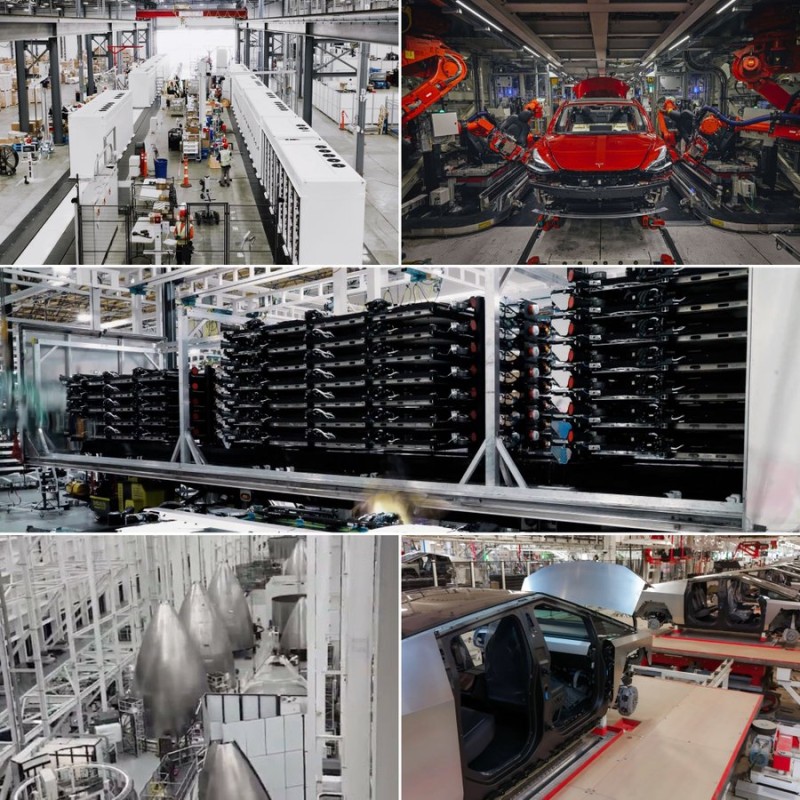
From Gigafactories to Humanoid Robots: Tesla's Integrated Industrial Strategy
Beyond semiconductors, Tesla continues scaling vehicle output across Gigafactories in Texas, Nevada, and California, while expanding US production of battery systems, Megapacks, and Starlink hardware. The Optimus humanoid robot remains a long-term priority, with robotics and AI positioned as core growth vectors alongside the core EV business. Reducing dependency on external semiconductor suppliers has been cited as a primary motivation for building in-house chip capacity at this scale.
What makes this strategy notable is its scope. Rather than optimizing individual product lines, Tesla and its related entities are aligning vehicle hardware, energy infrastructure, AI compute, and semiconductor production into one interconnected ecosystem. As demand for AI workloads accelerates globally, the companies appear to be betting that controlling the full hardware stack will deliver a durable competitive edge across every vertical they operate in.
 Saad Ullah



