
 Alex Dudov

⬤ OpenAI just dropped some eye-opening numbers that tell two very different stories. On one hand, revenue's been climbing fast—from $2 billion in 2023 to $6 billion in 2024, and now $20 billion annualized for 2025. They've also tripled their computing power from 0.6 gigawatts to 1.9 gigawatts. But here's the catch: while revenue's growing, their spending is growing even faster.
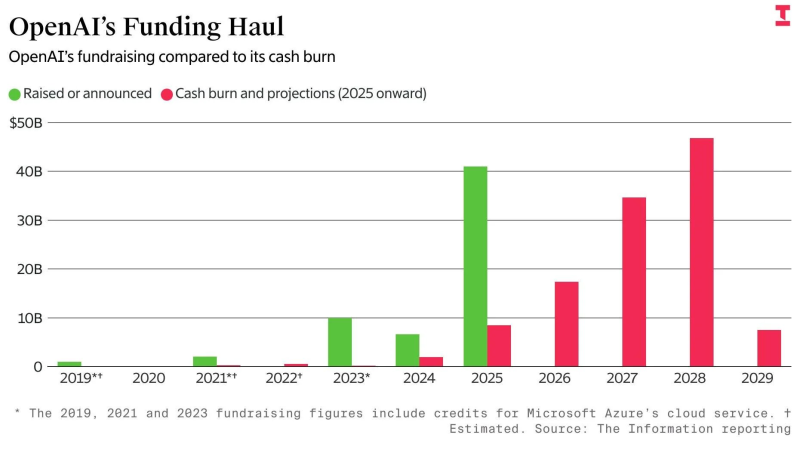
⬤ The company burned roughly $9 billion in 2025, and projections show things getting worse before they get better. Expected cash burn jumps to $18 billion in 2026, then $35 billion in 2027, and a staggering $47 billion by 2028. The numbers show operating costs accelerating way beyond revenue growth, mostly because running massive AI systems isn't cheap—and it's only getting more expensive.
⬤ There's another wrinkle worth noting: that $20 billion revenue figure is "annualized," meaning it's based on recent performance and projected forward, not actual full-year results. Meanwhile, revenue growth itself is expected to slow down significantly. Estimates suggest about 2.3x growth in 2026, dropping to 2x in 2027, and just 1.6x by 2028. To keep the lights on through all this, OpenAI raised over $40 billion in 2025 alone—a massive capital injection that shows just how much funding is needed to stay in the game.
⬤ This matters because OpenAI isn't just any startup—it's become the poster child for AI development, and these numbers paint a challenging picture. The gap between what they're making and what they're spending keeps getting wider, and profitability isn't expected until 2029 at the earliest. For investors and the broader market, this raises real questions about how sustainable the current model is and whether the enormous capital requirements of cutting-edge AI development can actually pay off in the long run.
 Alex Dudov



