
 Usman Salis

⬤ Mistral rolled out OCR 3, their latest take on reading documents automatically, and it's built specifically for companies dealing with serious document workflows. Early testing shows it's more accurate than traditional enterprise OCR and the newer AI-powered options that have been popping up lately. This puts Mistral right in the middle of what's becoming a pretty heated race in document AI.
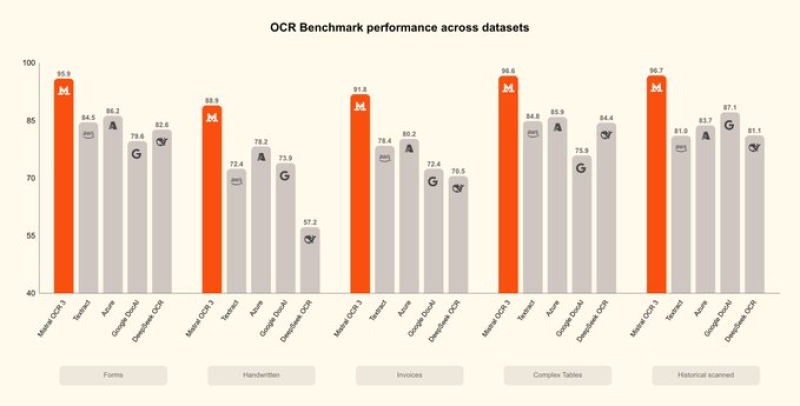
⬤ The benchmark numbers tell a clear story: Mistral OCR 3 comes out on top across five different document categories—forms, handwriting, invoices, messy tables, and old scanned records. It posted the highest accuracy in every single one. What's interesting is how well it handled the tough stuff like complicated table layouts and faded historical documents, which have always given OCR systems trouble because of formatting chaos and poor image quality.
⬤ The numbers back that up. While competing systems bunch together in similar accuracy ranges, Mistral OCR 3 pulls ahead with noticeably better scores everywhere. That consistency matters—it means the system isn't just optimized for one narrow use case but actually works across different real-world scenarios.

⬤ This upgrade hits at the right time because document processing is still a major pain point for companies in finance, healthcare, shipping, and government work. Better OCR accuracy means less manual fixing afterward, more reliable automation, and lower costs overall. With Mistral OCR 3 showing this kind of across-the-board performance, it's clear the competition in AI document processing is heating up, and raw model quality is becoming what separates the winners from everyone else when companies decide what to actually use.
 Usman Salis



