
 Marina Lyubimova

⬤ New data from the Bureau of Economic Analysis, U.S. Census, and related macroeconomic sources shows AI-related business investment made its biggest impact on GDP growth in early 2025 before weakening significantly in the second half of the year. Companies rushed to boost spending in the first half of 2025 to get ahead of upcoming tariff changes, creating a temporary spike in AI infrastructure outlays.
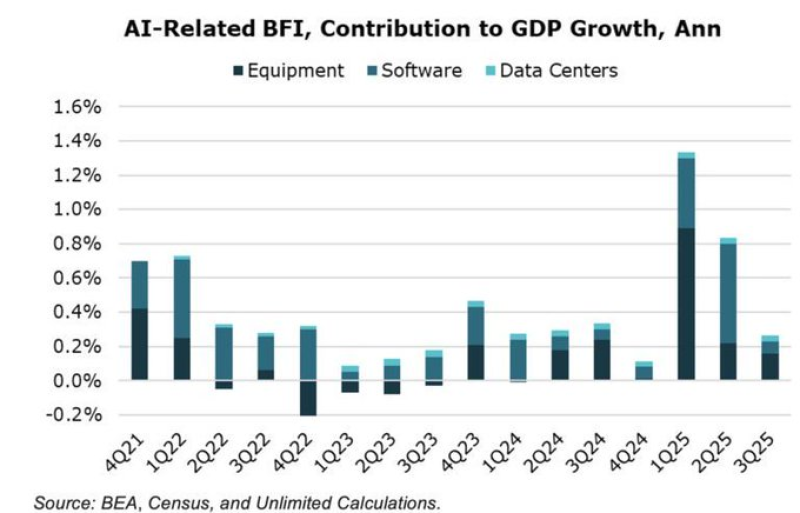
⬤ The numbers tell a clear story: AI-related investment—covering equipment, software, and data centers—delivered its strongest contribution to annualized GDP growth in Q1 2025, with data-center spending leading the charge. Once the pre-tariff rush ended, AI-linked spending dropped sharply and settled back near historical trend levels through late 2025.
⬤ Software spending also added to growth, though at a much more moderate pace than the data-center investment surge. AI-related equipment spending followed the same pattern—elevated in early 2025, then cooling off in later quarters as the tariff-driven boost faded away.
⬤ This matters because AI has been touted as a potential structural growth engine for the U.S. economy. The latest data suggests that despite ongoing AI adoption, the macroeconomic boost from AI investment in 2026 will likely be modest compared to the exceptional peak witnessed in early 2025.
 Marina Lyubimova



