Marina Lyubimova

⬤ A platform called Lyo is positioning itself as an AI-native data defense solution built to monitor and control how AI agents access enterprise data. The system runs continuously across codebases, cloud environments, SaaS platforms, and AI infrastructure, tracking data flows in real time and flagging access patterns that fall outside defined policies.
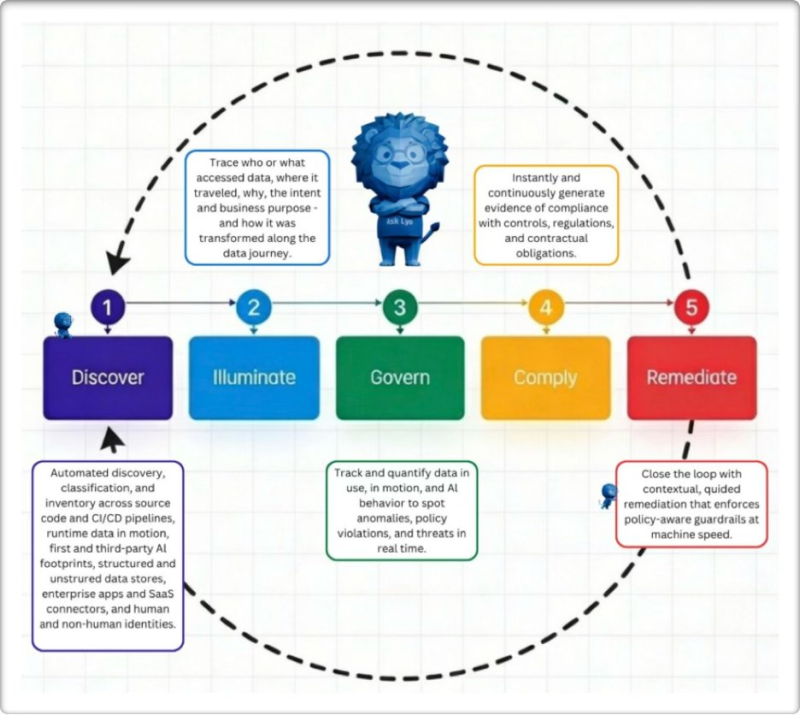
⬤ Lyo's architecture follows a five-step data security lifecycle: Discover, Illuminate, Govern, Comply, and Remediate. It starts with automated classification across pipelines and runtime environments, then maps how data is accessed, transformed, and shared. Governance covers real-time anomaly detection and policy enforcement, while compliance tooling generates regulatory evidence continuously.
⬤ The platform provides end-to-end visibility into data journeys, recording who accessed what, where it traveled, and how it was used. Remediation is automated, enforcing corrective actions without manual intervention. These concerns around agent-level access are explored further in AI security risk rises as autonomous agents outpace IAM visibility and Anthropic launches security center for Claude Code with realtime scanning, where real-time scanning is applied to codebases and developer workflows.
⬤ The wider picture is that AI agents are no longer just tools but active participants in data flows, creating governance gaps that legacy security systems were never designed to close. As covered in how AI models learn to detect and fix security vulnerabilities in code, AI is now embedded in both producing and auditing software, making continuous monitoring platforms like Lyo increasingly relevant to enterprise security strategies.
 Marina Lyubimova