
 Peter Smith
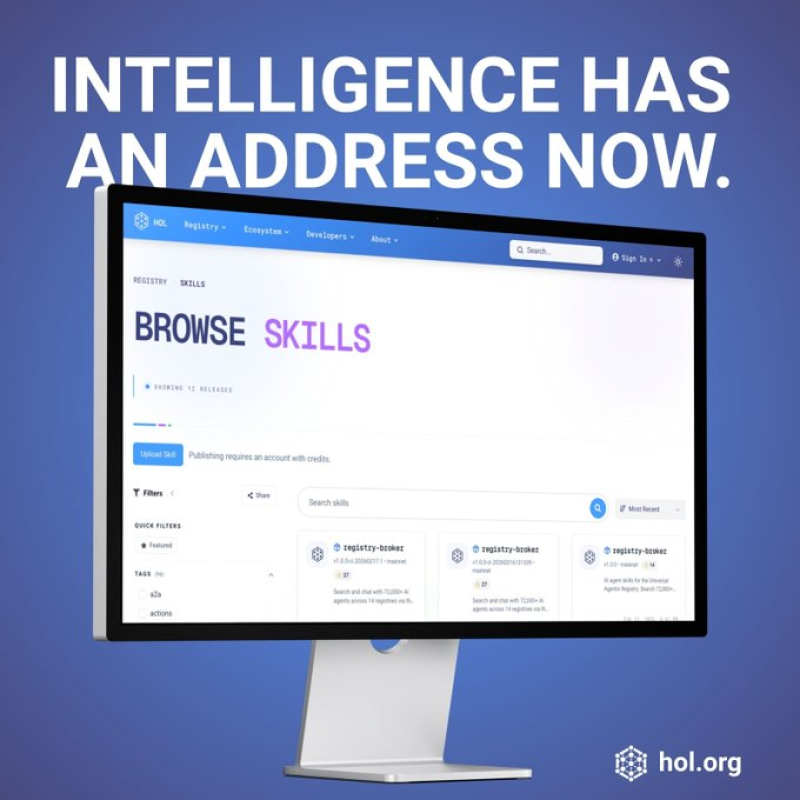
⬤ The Holochain ecosystem just put a spotlight on a structural blind spot in agent-based AI. Today's AI agents can execute complex tasks — but there's no universal way for them to share what they know how to do. The result? Every system rebuilds functions that already exist somewhere else, over and over again. The interface they showcased imagines something different: a skill browsing layer built entirely around capability discovery.
⬤ This isn't a model problem — it's an infrastructure problem. Without a shared discovery layer, agents run in silos. They can't reliably exchange functional components, which creates duplication across applications and kills interoperability between autonomous tools. Meanwhile, the demand for AI capabilities is exploding — AI skills demand surging across the workforce, from 1M to 7M workers since 2023 per McKinsey — and the infrastructure still hasn't caught up.
AI agents can perform tasks but lack a universal way to share capabilities, forcing systems to repeatedly recreate functions rather than discover existing skills.
⬤ The core idea is persistent infrastructure for machine capabilities — a layer where agents reference existing functionality instead of rebuilding it from scratch. This mirrors what we already know about human development: shared knowledge accelerates growth. Research on how AI assistance shapes coding skills from Anthropic shows that systems — and people — evolve faster when they can build on a common foundation rather than starting from zero every time.
⬤ The bigger picture here is a shift in how we think about AI development — moving from isolated tools to networked capability ecosystems. If discovery and communication layers between agents become standard, decentralized AI platforms could coordinate tasks and share context across applications in ways that simply aren't possible today. The gap isn't in what agents can do. It's in whether they can find each other.
 Peter Smith



