
 Eseandre Mordi
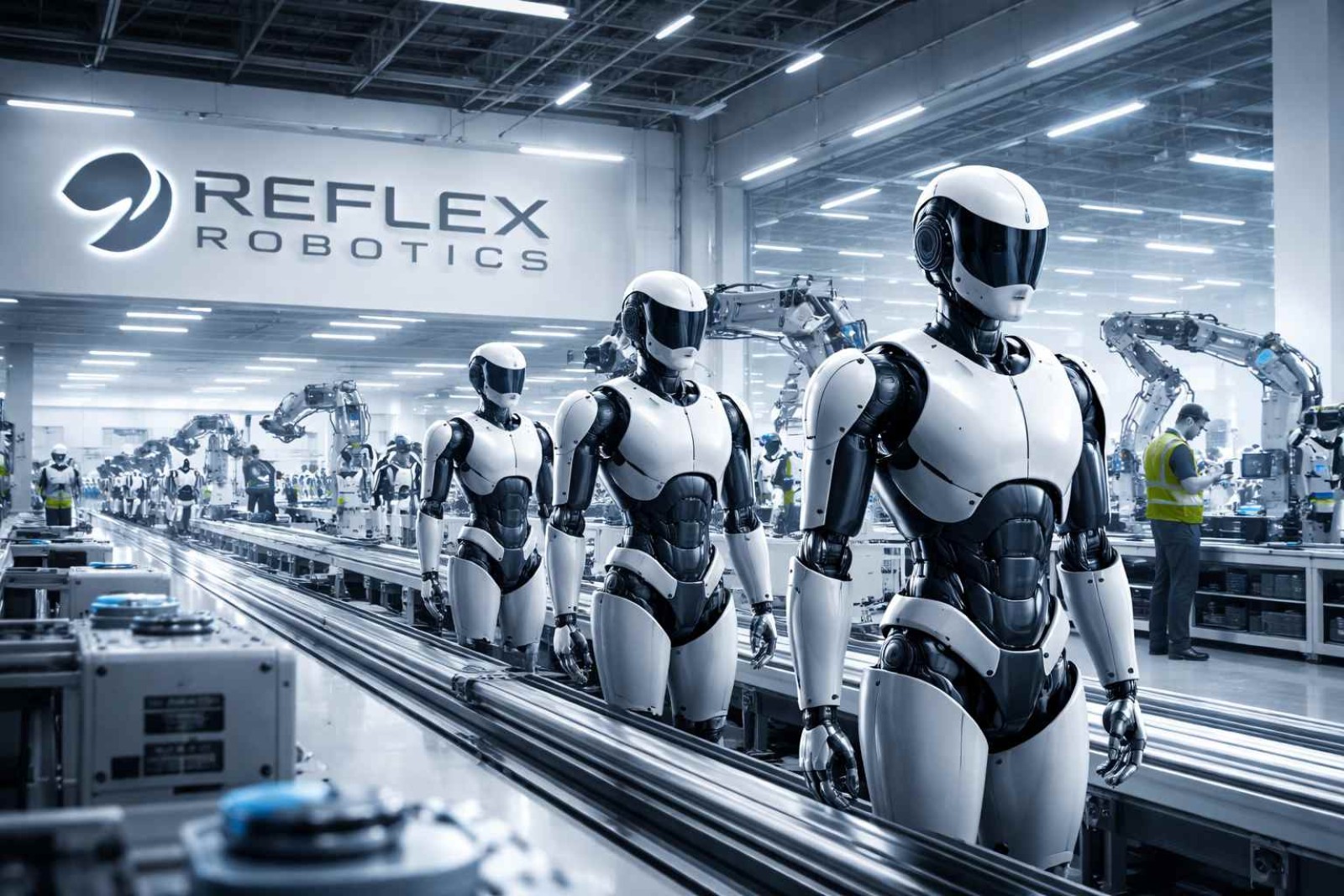
The warehouse automation race just shifted into high gear. Reflex Robotics is moving beyond testing phases and into industrial-scale manufacturing with a new production facility in Mexico designed to pump out thousands of humanoid workers for America's logistics backbone.
Reflex Robotics Commits to Mass Production
Reflex Robotics has entered a new growth phase with the announcement of a humanoid robot factory in Nuevo Leon, Mexico. The facility marks the company's pivot from development to large-scale manufacturing of warehouse automation robots.
The company's humanoids feature dual coordinated arms, vertical movement capabilities, and omnidirectional mobility—specs that make them practical for real-world logistics environments. These machines are already working inside U.S. warehouses, handling sorting and goods movement at facilities operated by GXO and various e-commerce distribution centers.
10,000-Unit Deployment Target for U.S. Logistics
Reflex Robotics has set an ambitious goal: deploy more than 10,000 humanoid robots throughout American warehouses. Their compact design gives them an edge in tight spaces where traditional automation systems can't fit or would require expensive facility overhauls.
The robots aren't limited to warehouse work. Reflex is eyeing expansion into waste processing facilities and construction sites, where the same mobility and dexterity that work in distribution centers could handle sorting, materials handling, and repetitive physical tasks.
Strategic Partnership With Locus Robotics
The company previously teamed up with Locus Robotics, combining humanoid capabilities with autonomous mobile robot (AMR) systems. This Humanoid + AMR model automates entire logistics workflows—from picking to sorting to final handling—creating integrated systems that reduce human labor requirements across distribution operations.
The Mexico factory signals Reflex Robotics is preparing for significant production volume to support wider deployment of humanoid automation across logistics infrastructure. With warehouse operators facing persistent labor shortages and efficiency pressures, the timing positions Reflex to capture growing demand for robotic warehouse workers that can operate alongside existing systems without major facility overhauls.
 Eseandre Mordi



