
 Artem Voloskovets

⬤ Anthropic just dropped a fascinating Economic Index Report that breaks down exactly how people are using Claude AI in the real world. This isn't just another AI hype piece—it's actual data showing how Claude performs across different education levels, countries, and job types. The report digs into productivity gains, success rates, and who's adopting AI the fastest.
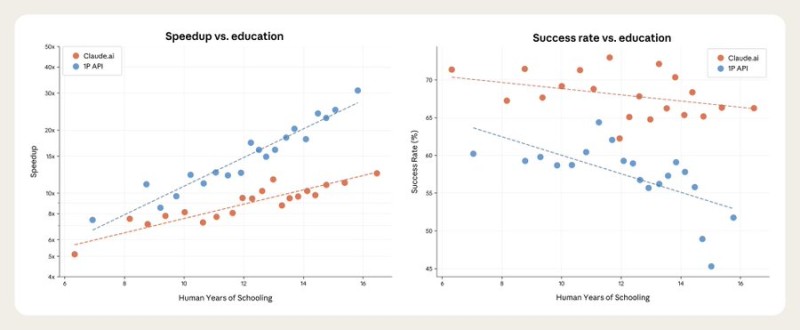
⬤ Here's where it gets interesting: the smarter the work, the bigger the speedup. People with more years of education see significantly better productivity gains when using Claude, especially on complex tasks. The data shows Claude really shines when tackling high-skill work. But there's a catch—as tasks get harder, the success rate drops. So you're getting faster results on difficult problems, but those problems are also more likely to hit a wall.
⬤ The geographic breakdown reveals some surprising patterns. Rich countries are using Claude mostly for personal productivity and teamwork, while developing regions lean heavily on coursework help and automation tasks. In the U.S., Claude adoption is spreading faster than almost any previous tech wave, with states quickly catching up to each other in usage rates. AI access is becoming more equal, even though people are using it for wildly different purposes.
⬤ The report doesn't sugarcoat the risks. There's a real concern about deskilling—where AI handles the complex parts of jobs and leaves humans doing the boring, repetitive stuff. At the same time, the productivity numbers show Claude is becoming essential for high-level work. We're heading toward a future where AI makes certain work incredibly efficient, but the benefits and challenges won't be distributed evenly across jobs, skills, or countries.
 Artem Voloskovets



