
 Peter Smith
⬤ 0G Labs is rethinking AI infrastructure by moving artificial intelligence operations onto blockchain networks. Instead of depending on traditional cloud providers, the company's approach enables cryptographic verification of every computation, creating a transparent alternative to centralized AI systems.
⬤ The architecture tackles a fundamental problem: trust. Conventional AI services require users to trust centralized operators without any way to verify results independently. 0G Labs' system flips this model by allowing anyone to validate computational outputs. This eliminates single points of failure and creates a trustless environment where verification doesn't require faith in any particular provider.
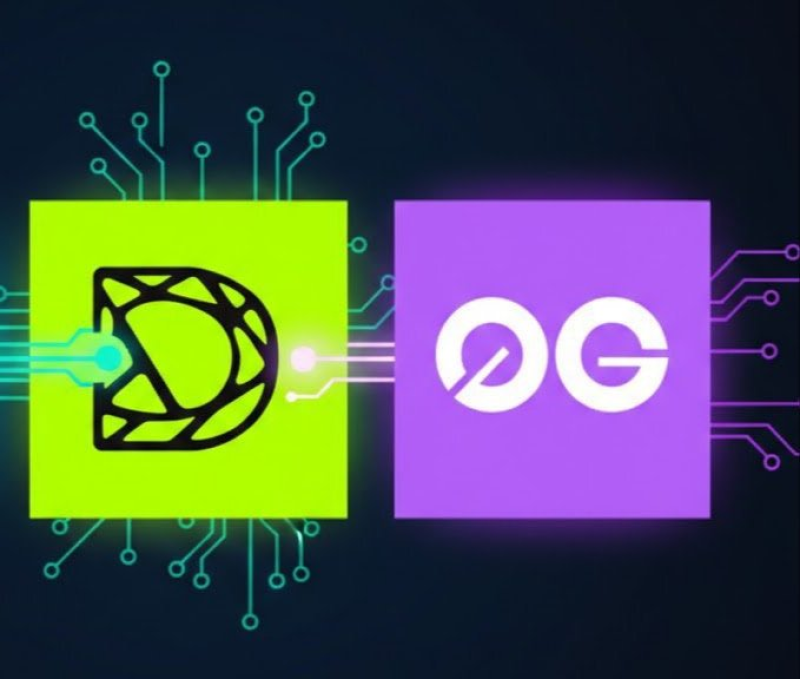
⬤ A key component is dgrid_ai, which generates cryptographic proof for every AI operation performed on the network. By merging machine learning execution with blockchain verification mechanisms, the platform bridges two previously separate worlds. Users can confirm that AI-generated results are genuine without accessing proprietary infrastructure or trusting black-box systems.
⬤ The implications extend beyond technical architecture. Verifiable computation could reshape how businesses and developers deploy AI applications. When every operation produces independently verifiable proof, new use cases become possible—from financial analysis requiring auditable AI decisions to healthcare applications where model outputs must be traceable and trustworthy.
⬤ This represents a broader shift in how AI services might function. Rather than concentrating power and processing in a few major cloud platforms, decentralized infrastructure distributes execution across networks. The approach prioritizes transparency, resilience, and independently provable results over convenience and speed.
⬤ While centralized AI has dominated the landscape, 0G Labs' verifiable infrastructure suggests an alternative path forward—one where users don't need to choose between powerful AI capabilities and the ability to verify what's actually happening behind the scenes. As blockchain principles merge with artificial intelligence, the definition of trustworthy AI may be expanding beyond performance metrics to include cryptographic certainty.
 Peter Smith



