
 Eseandre Mordi

⬤ OpenAI is staring down some seriously big numbers. Market estimates suggest the company could need up to $1.4 trillion in total funding by the early 2030s just to keep its AI systems running — covering compute, infrastructure, and day-to-day operations. Here's the thing: the bulk of that isn't just software. It's physical, capital-heavy stuff like cloud capacity and data centers.
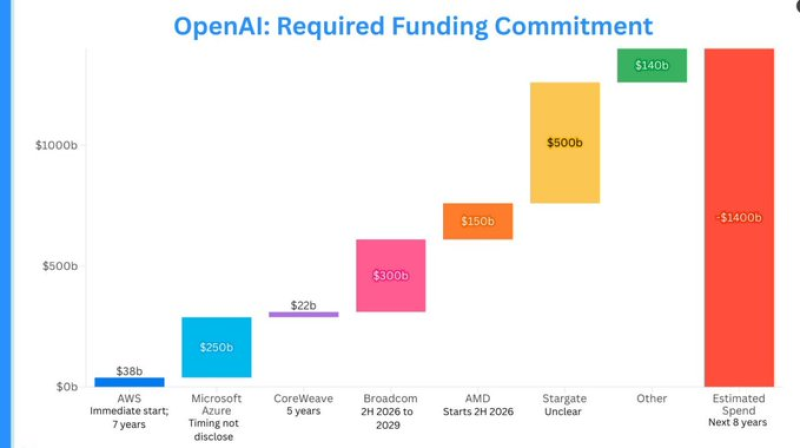
⬤ A huge chunk of that money goes straight to cloud computing. We're talking massive multi-year deals — think Microsoft Azure and other major providers — plus new spending waves hitting from 2026 onward as the models get bigger and hungrier for compute. Training and running next-gen AI isn't cheap, and the bills are only going up.
If this spending trajectory plays out, OpenAI would become one of the largest long-term consumers of cloud capacity and advanced semiconductors on the planet.
⬤ Chips and hardware are another massive line item — we're looking at hundreds of billions tied to advanced accelerators, custom silicon, and the data center infrastructure needed to power it all. Power, cooling, networking — none of it is cheap, and OpenAI needs it all running at scale to stay competitive.

⬤ OpenAI isn't just an AI company anymore — it's becoming one of the biggest infrastructure plays in tech. This kind of capital-intensive growth is reshaping the entire AI sector, where the real race isn't just about smarter models. It's about who can build the physical foundation to support them.
 Eseandre Mordi



