
 Marina Lyubimova

⬤ A fresh open-source project just landed in the AI software world surrounding Nvidia-powered infrastructure. Researchers at the University of Hong Kong rolled out nanobot—a stripped-down framework spun off from the much beefier OpenClaw agent architecture—built to make AI agent deployment faster and simpler.
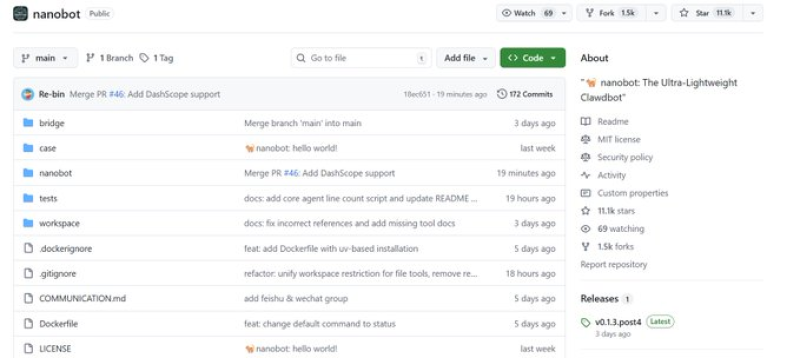
⬤ The project shrinks the original system down to roughly 4,000 lines of Python while keeping full functionality intact. Instead of stacked layers of abstractions, nanobot runs a straightforward loop: take input, reason through it, and fire off tools like file ops or web searches. The repo shows a tidy codebase with docs, tests, and container setup ready to go. More implementation details live at opensource-nanobot-ai-assistant-launches-with-99-less-code-than-clawdbot.
⬤ The simplified structure leans on modular function calls designed to be easier to grasp and tweak than older agent frameworks. The release fits into wider collaborative software trends where streamlined, accessible tools gain traction across developer communities.
⬤ This move signals a shift toward lightweight AI tooling where usability and quick setup take center stage. Simplified frameworks like nanobot could reshape how dev teams adopt and weave agent-based automation into the AI software stack.
 Marina Lyubimova



