
 Peter Smith
⬤ Z.ai just dropped GLM-4.7, their newest open-source language model that's showing real improvements over the previous GLM-4.6 version. The upgrade isn't just about technical benchmarks—it's also making waves in chat quality, creative writing, and role-play scenarios. But the numbers tell the most interesting story here.
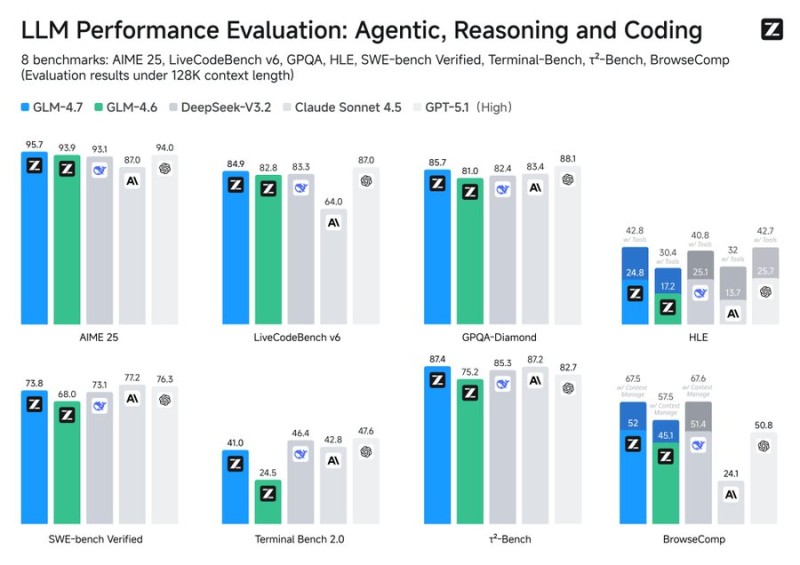
⬤ The benchmark comparison puts GLM-4.7 head-to-head with GLM-4.6 and other popular models across eight different tests: AIME 25, LiveCodeBench v6, GPQA-Diamond, SWE-bench Verified, Terminal-Bench, τ²-Bench, and BrowseComp. Everything's measured at 128K context length. When you look at coding-focused benchmarks like LiveCodeBench v6 and SWE-bench Verified, GLM-4.7 consistently beats its predecessor, showing better code generation and more reliable problem-solving.
⬤ The reasoning and agentic evaluations show steady progress too. GLM-4.7 pulls ahead in GPQA-Diamond and τ²-Bench, proving it can handle complex reasoning better than before. Tool-use performance got a boost as well, with stronger results in benchmarks testing multi-step execution and external tool interaction. While some tasks show bigger jumps than others, the overall trend points to meaningful advancement across the board.
⬤ What makes this release significant is how it highlights the speed of open-source AI development. Benchmark leadership keeps changing with each new release, and GLM-4.7's improvements in coding, reasoning, and tool usage open up more practical applications for research and development teams. As open-source models continue narrowing the gap with proprietary options, updates like this one could shift how companies think about capability, flexibility, and transparency when choosing their AI infrastructure.
 Peter Smith



