
 Marina Lyubimova

The open-source AI agent project OpenClaw just crossed a major milestone, pulling in 145,000 GitHub stars while rolling out a comprehensive setup guide. Developers now have a clearer path to deploy the system safely and understand how its architecture actually works under the hood.
GitHub Milestone Signals Growing Developer Interest
OpenClaw's rapid climb to 145,000 stars came alongside the launch of an OpenClaw Starter Guide that walks users through installation and safe operation. As God of Prompt pointed out, the guide breaks down the platform's four core components—gateway, agent, skills, and memory—and promises setup in about 30 minutes across different hardware setups.
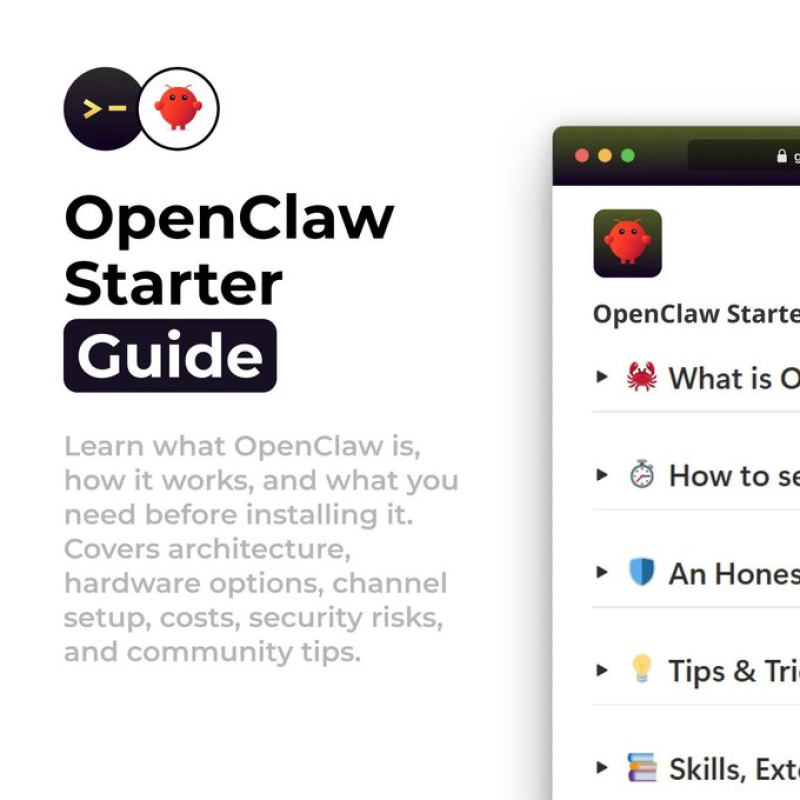
The focus is on building an AI assistant that handles real tasks, not just chat. Recent updates like OpenClaw adding Opus-46 and GPT-5.3 Codex support show the ecosystem keeps expanding.
Security and Memory Configuration Take Center Stage
The new guide puts security front and center. It lays out hardening steps to keep locally hosted agents from accidentally going public and introduces memory configuration prompts so the system can remember user context over time.
Developer God of Prompt noted, The shift toward persistent state changes how agents work—they're not starting from zero every session.
This mirrors broader trends in agent design where persistent memory and multimodal processing become must-have features, similar to what's happening with multimodal generation systems in newer AI models.
The release highlights a shift in priorities. Instead of chasing bigger models, the community's zeroing in on safe operation, long-term memory, and getting agents to execute real-world tasks. As adoption spreads across developer circles, agent-based applications are moving beyond simple chat interfaces into territory where setup knowledge and security configurations matter just as much as the underlying AI capabilities.
 Marina Lyubimova



