
 Marina Lyubimova

⬤ Retrieval-Augmented Generation has come a long way from its humble beginnings. What started as a straightforward process—grab some documents, feed them to a language model, get an answer—has exploded into a whole ecosystem of specialized approaches. These new RAG variants tackle real-world challenges like keeping answers accurate, reducing response times, meeting compliance requirements, and understanding context better.
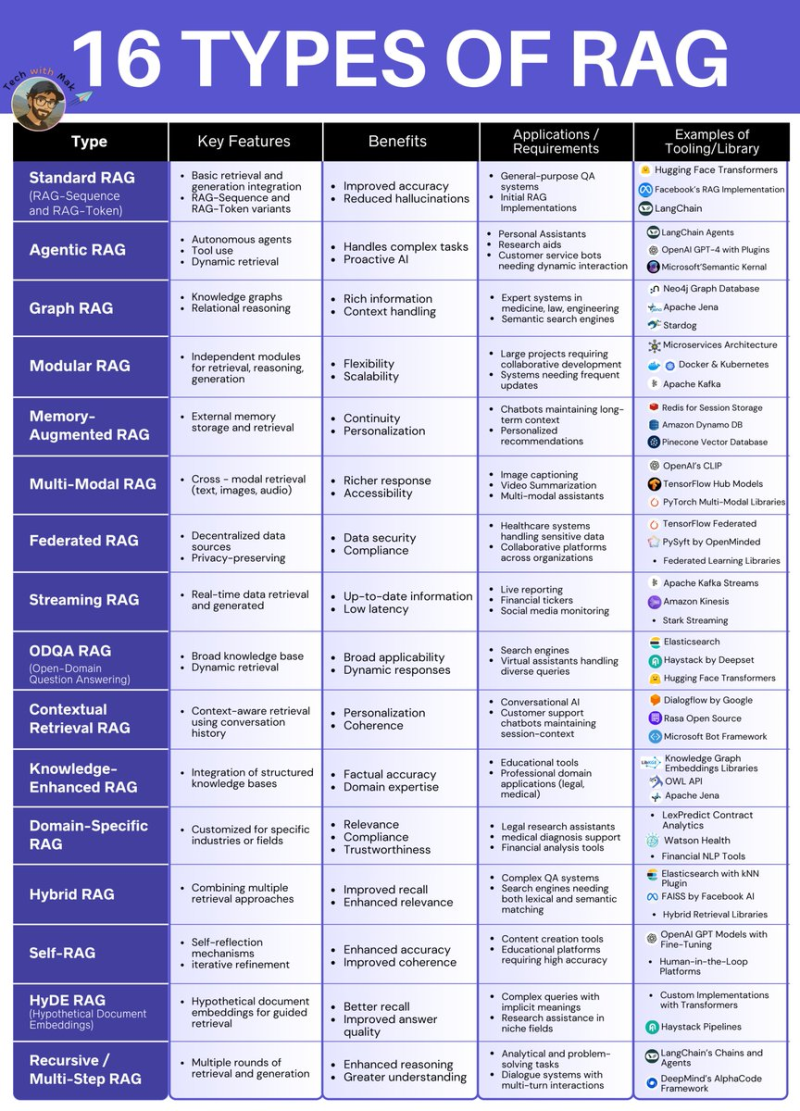
⬤ The foundation still matters: Standard RAG with its RAG-Sequence and RAG-Token flavors remains solid for everyday question-answering tasks. But the exciting stuff is happening with the newer variants. Graph RAG connects language models with knowledge graphs, letting AI understand how different pieces of information relate to each other. Memory-Augmented RAG adds a long-term memory layer, perfect for ongoing conversations and tasks that need to remember what happened before.
⬤ Multi-Modal RAG breaks out of the text-only box, pulling in images, audio, and video to create richer responses—think automatic image descriptions or video summaries. Streaming RAG handles live data feeds like stock tickers or system logs in real time. Open-domain question answering RAG (ODQA RAG) has become one of the most popular versions, dynamically tapping into massive knowledge bases. Then there's Domain-Specific RAG, custom-built for industries like healthcare, law, and finance where generic answers won't cut it.
The field has branched into specialized types that enhance RAG's capabilities, addressing various challenges such as accuracy, latency, compliance, and contextual understanding.
⬤ The cutting-edge variants push things even further. Self-RAG actually double-checks its own work before giving you an answer, boosting accuracy. HyDE creates hypothetical documents to improve how it finds information. Recursive RAG handles complex questions that need multiple steps of reasoning. Together with innovations like Agentic RAG and Modular RAG, these systems are building AI that's more flexible, faster, and capable of tackling sophisticated real-world problems.
 Marina Lyubimova



