
 Eseandre Mordi

⬤ Fresh research from Epoch AI reveals a dramatic acceleration in frontier AI development starting in 2024. The Epoch Capabilities Index tracked in their latest analysis shows the annual improvement rate jumped from around 8 points per year before 2024 to roughly 15 points afterward—nearly doubling the pace of progress. The data marks a clear turning point, with recent frontier models advancing considerably faster than their predecessors.
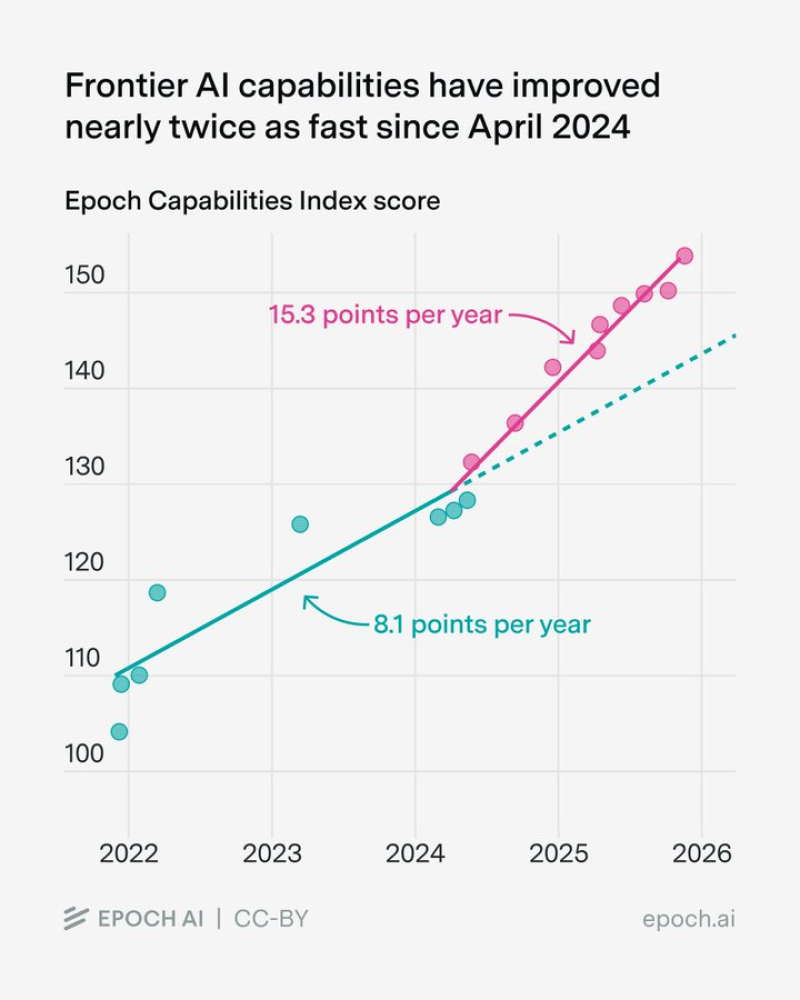
⬤ This surge stems largely from breakthroughs in reasoning-focused architectures and reinforcement learning methods. Epoch's index measures performance across multiple frontier systems rather than single benchmarks, giving a comprehensive view of capability growth. The steeper trajectory after 2024 indicates that modern training approaches and model designs are scaling AI capabilities far more efficiently than earlier methods.
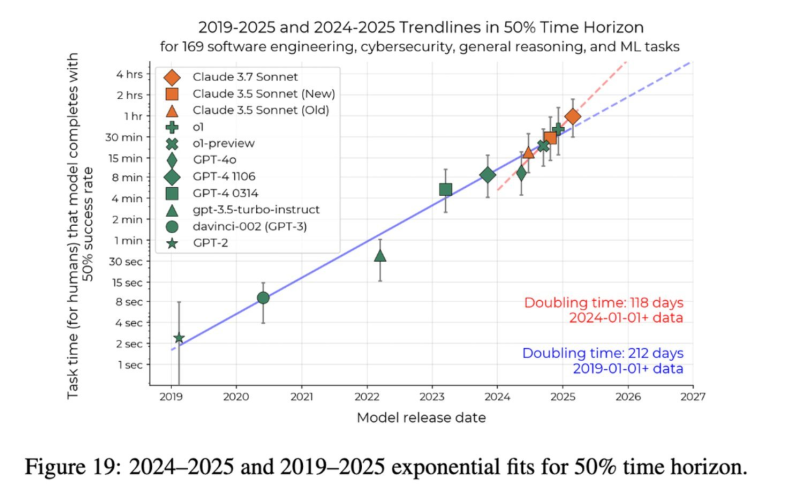
⬤ Supporting evidence comes from task completion analysis covering 169 challenges in software engineering, cybersecurity, reasoning, and machine learning. Comparing long-term trends (2019-2025) against recent performance (2024-2025) reveals a striking shift: performance doubling time dropped from 212 days to just 118 days. AI systems now reach the same capability levels in roughly half the time.

⬤ This acceleration matters because it signals AI development entering a faster-than-expected growth phase. Shorter doubling times could speed up the deployment of advanced systems from labs into real-world applications. As this rapid pace continues, it's set to reshape expectations around productivity gains, competition between AI companies, and AI's broader economic impact.
 Eseandre Mordi



