
 Eseandre Mordi

⬤ Anthropic just dropped details on a new AI safety technique meant to cut down the chances of harmful outputs from advanced AI systems. The method, called Selective Gradient Masking, is built to pinpoint and suppress certain types of "dangerous knowledge" hiding inside AI models, all while keeping the system's general smarts running smoothly. What makes it interesting? Anthropic claims this kind of suppression is way harder to undo compared to typical unlearning methods.
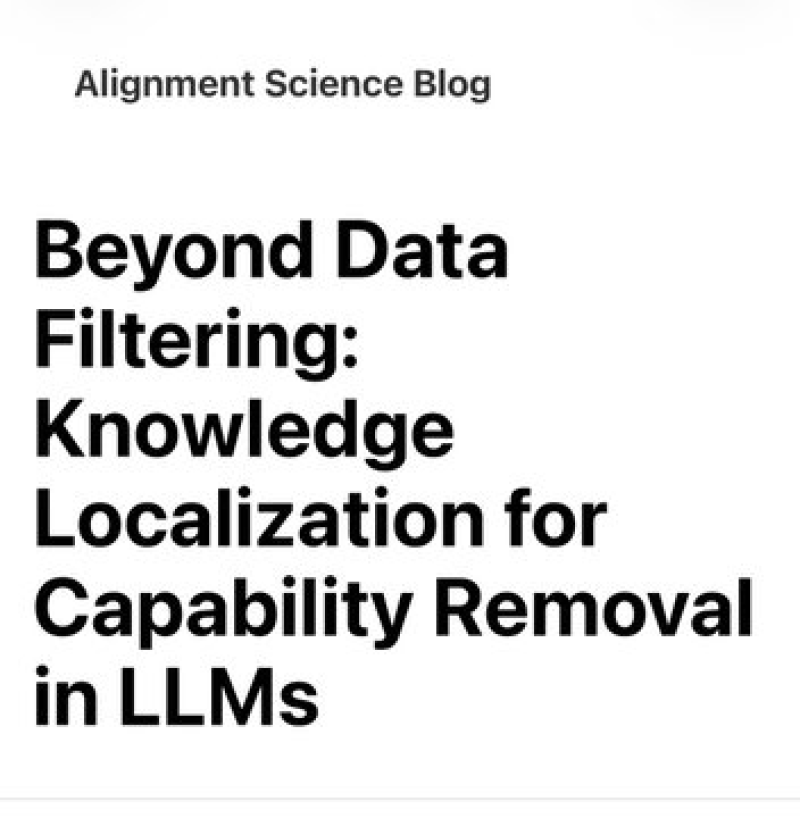
⬤ Here's how it works: instead of weakening the whole system, Selective Gradient Masking zeros in on specific risky knowledge and selectively masks it. Think of it as blocking off certain rooms in a house while leaving the rest fully functional. This lets the AI keep doing what it does best while steering clear of high-risk behaviors or information. And according to Anthropic, trying to reverse this masking would be a much bigger headache than cracking conventional unlearning processes, which haven't exactly been bulletproof.
⬤ But there's a catch. The whole thing has sparked fresh debate about whether these "capability removal" techniques actually hold up in the real world. Critics wonder if methods like this should be treated as solid safeguards or just high-tech security theater that can't really be verified independently. That's still a hot topic among AI safety experts and policymakers trying to figure out what genuine protection looks like.
⬤ Why does this matter? Anthropic is one of the heavyweights in cutting-edge AI research, and whatever safety moves they make get watched closely by everyone from tech insiders to regulators. If Selective Gradient Masking proves it can stand up to scrutiny, it could reshape how we think about AI governance and what we expect from deployment standards. But until we know how durable and verifiable these protections really are, questions about advanced AI risk aren't going anywhere.
 Eseandre Mordi



