
 Artem Voloskovets

⬤ Citi analysts expect OpenAI's major expenses to hit in the second half of 2026, potentially straining the company's ability to meet obligations. According to Financial Times data based on Jefferies estimates, OpenAI accounts for 58% of Oracle's backlog, 39% of Microsoft's pipeline, and only 16% of Amazon's future contracts. Investors are showing preference for stocks with lighter OpenAI exposure.
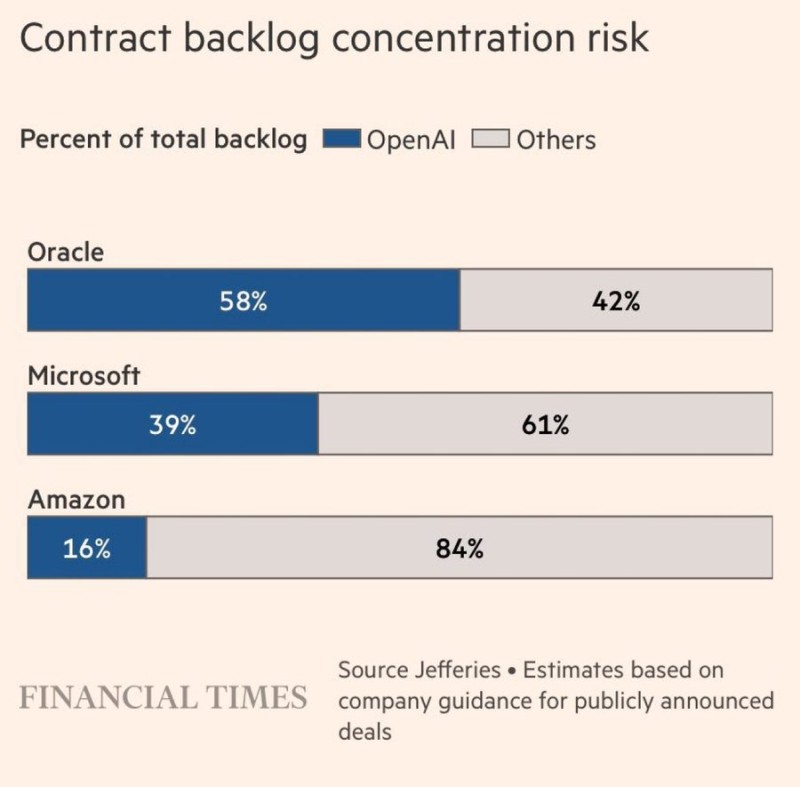
⬤ The numbers reveal how dependent some cloud providers have become on OpenAI's growth. While Microsoft, Oracle, and Amazon all profit from AI compute demand, those carrying smaller OpenAI percentages face less vulnerability if spending patterns shift. AWS revenue is projected to grow around 25% next year, giving Amazon breathing room with its diversified backlog.
⬤ Amazon shares are trading near the bottom of their historical valuation range, making AMZN a preferred pick heading into 2026. The company appears relatively protected compared to Microsoft and Oracle, at least when it comes to backlog diversification around OpenAI partnerships.
⬤ The broader picture shows how intertwined cloud infrastructure and AI development have become financially. With OpenAI representing significant chunks of multiyear contracts across major tech players, any change in OpenAI's spending capacity could ripple through sector earnings. Citi frames this exposure as both a growth driver and a concentration risk worth watching beyond 2026.
 Artem Voloskovets



