
 Artem Voloskovets
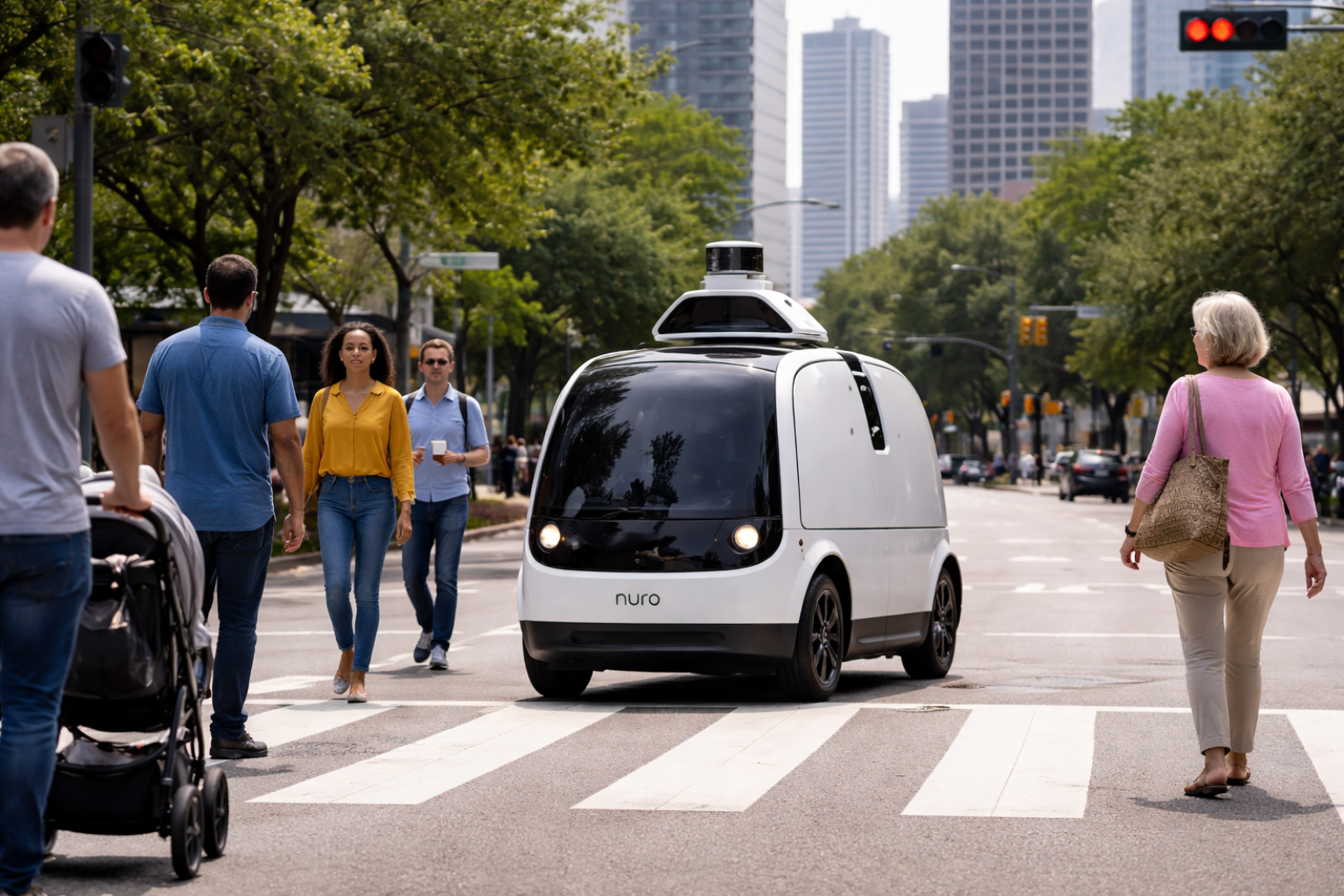
⬤ Autonomous driving company Nuro recently released footage showing how its AI-powered vehicle handles one of the trickiest scenarios in self-driving: a busy school drop-off zone in Houston. The video captures the system navigating around students and working alongside school crossing guards, demonstrating how the technology performs when pedestrians are everywhere and traffic patterns are anything but predictable.
⬤ What makes school zones particularly challenging is the constant movement and unpredictability. Kids darting between cars, parents double-parking, crossing guards waving traffic through with hand signals instead of standard traffic lights—it's a perfect storm of situations that autonomous systems need to master. The footage shows Nuro's AI driver responding to these informal cues and adapting to pedestrian movements in real time, rather than just following programmed routes or reacting to fixed signals.
⬤ Nuro emphasized that scenarios like morning school drop-offs are essential testing grounds for autonomous technology. Unlike highway driving or quiet suburban streets, school zones throw everything at the system at once—crossing guards directing traffic, children moving unpredictably, and constantly shifting vehicle flow. By operating in these environments, the AI gains practical experience that can't be replicated in controlled testing facilities.

⬤ This matters because pedestrian safety remains the biggest hurdle for widespread autonomous vehicle adoption. Demonstrating that a self-driving system can handle chaotic school zone conditions shows meaningful progress toward vehicles that can operate safely in everyday situations. As autonomous technology moves closer to real-world deployment, proving reliability in pedestrian-heavy environments like school zones becomes critical for public trust and regulatory approval.
 Artem Voloskovets



