
 Saad Ullah

⬤ A groundbreaking research paper called "Context Engineering 2.0: The Context of Context Engineering" just dropped, and it's shaking up how we think about AI interactions. The work suggests that context engineering isn't just another buzzword—it's actually a more fundamental approach than prompt engineering for getting AI systems to understand what we really want.
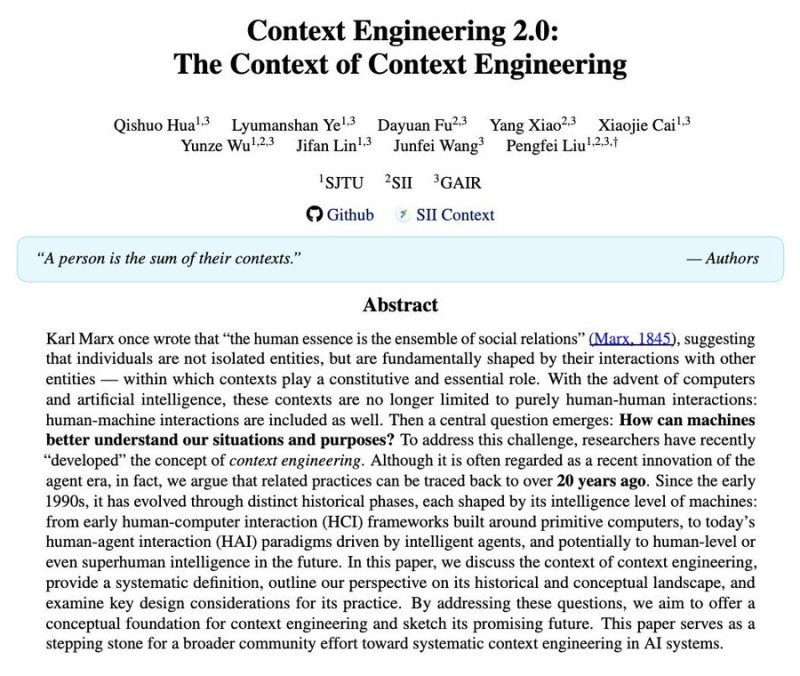
⬤ Here's the surprising part: context engineering isn't new at all. Researchers from SJTU, SII, and GAIR traced its roots back over 20 years to the 1990s, when it first emerged in human-computer interaction research. The field has quietly evolved through multiple stages alongside advances in machine intelligence, growing from basic interaction frameworks with primitive computers to today's sophisticated human-agent systems.
⬤ The paper's core insight is that context isn't just what you type into a chatbot. As the researchers explain, "context should be viewed as an integrated system rather than a single input"—it's the combination of relationships, environments, histories, and goals that actually shape how machines behave. This makes prompt engineering look pretty limited by comparison, since it mostly focuses on perfecting individual instructions.
⬤ What makes this research matter is timing. As AI systems move from labs into real-world applications, understanding context systematically could determine whether these tools actually get what we need. Context Engineering 2.0 signals a shift in AI development—away from isolated prompt tweaking and toward building systems that genuinely grasp the full picture of tasks, users, and environments.
 Saad Ullah



