Saad Ullah

⬤ OpenAI has been quietly getting much better at making money from its AI services. By October, the company's compute margins for paying users hit almost 70%, a dramatic jump from where things stood at the start of 2024. The numbers show a clear upward trend throughout the year, meaning OpenAI is keeping more revenue for every dollar it spends running its models. This isn't just a lucky break—it's the result of deliberate infrastructure improvements and cost cutting.
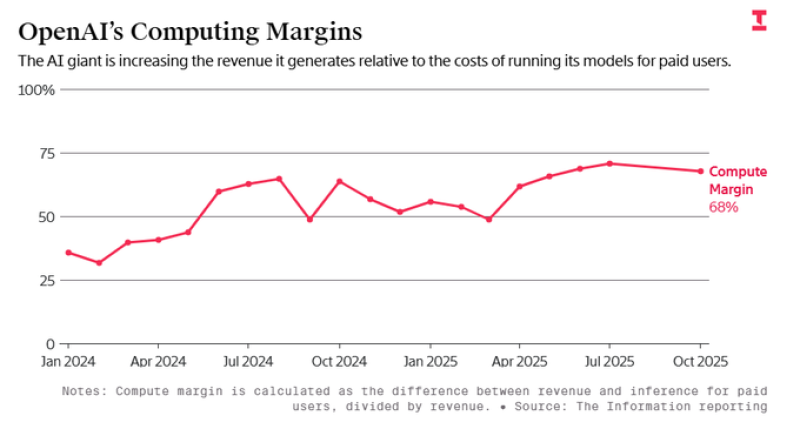
⬤ Back in January 2024, OpenAI's compute margin sat around 35%. By year-end, it had climbed to roughly 52%, and recent data shows it pushing toward 70%. That's a pretty impressive trajectory, especially since the gains appear steady rather than erratic. The improvement comes down to three main factors: cheaper rented compute power, better inference efficiency (basically, squeezing more performance out of less hardware), and new premium subscription tiers that boost average revenue per customer.
⬤ The margin expansion really accelerated after OpenAI went into what they internally called "Code Red" mode. This happened after DeepSeek dropped a competing model that got people's attention, prompting OpenAI to double down on controlling server and compute costs. The numbers back that up—whatever they changed under the hood, it's working. That said, Anthropic is still expected to run leaner overall when you factor in total computing costs, so OpenAI isn't alone in the efficiency race.

⬤ Higher margins mean OpenAI can grow without bleeding cash on infrastructure, which gives them more room to compete on price, invest in new models, or just stay profitable as demand explodes. As the AI wars heat up, the companies that figure out how to deliver cutting-edge models cheaply will have a major advantage in shaping where the industry goes next.
 Saad Ullah