
 Saad Ullah
⬤ A bunch of mystery AI models popped up on the Arena recently. Among them were "Karp-001" and "Karp-002"—apparently Qwen-3.5 systems from Alibaba—plus "Pisces-llm-0206a" and "Pisces-llm-0206b," which seem to be ByteDance's Seed models. So basically, two of China's biggest tech players are quietly testing their latest AI toys in public.
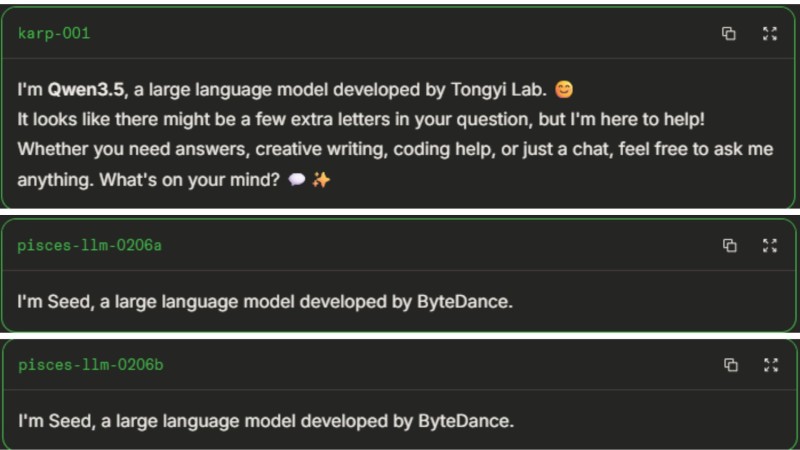
⬤ The simultaneous appearance of multiple model versions indicates these aren't finished products but works-in-progress being refined through real-world evaluation. Arena typically measures how well AI handles instructions, solves complex problems, and maintains coherent conversations compared to rival systems. The parallel testing of different iterations shows Chinese frontier AI models are moving rapidly through development cycles.
⬤ Alibaba and ByteDance are among the rare Chinese labs with enough computing muscle to compete at early-2026 performance levels, noting ByteDance might actually have deeper pockets for GPU allocation between the two. As one analyst noted, "Hardware access is now the real bottleneck—not algorithms." This observation underscores how GPU capacity competition increasingly determines who leads the AI race.
⬤ Public benchmarking appearances typically foreshadow official launches by weeks or months. The fact that both companies chose open evaluation platforms rather than private testing suggests confidence in their systems' performance and hints at imminent announcements as the global AI development war heats up.
 Saad Ullah



