
 Usman Salis

● Job postings fell 8% overall in 2025, but creative roles were devastated: computer graphics artists down 32.70%, compliance specialists 29.23%, photographers 28.14%, writers 27.89%. Meanwhile, technical positions like ML engineers surged 40%, revealing a fundamental split in the labor market driven by AI automation.
● A recent Bloomberry analysis shared by Chubby shows just how dramatically AI is reshaping the job market. Overall postings dropped 8% in 2025 compared to 2024, but the real story is in the breakdown.
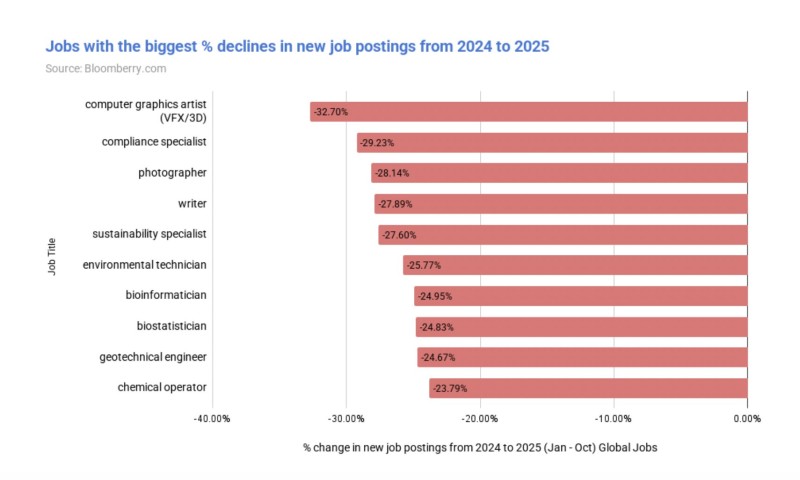
● Creative and execution-heavy roles took the biggest hit. Computer graphics artists saw postings plunge 32.70%, compliance specialists fell 29.23%, photographers dropped 28.14%, and writers declined 27.89%. It's a clear sign that automation is taking over content creation, design work, and routine operational tasks.
● Policymakers are now debating new taxes targeting AI-driven industries—think higher levies on compute-intensive operations and penalties for companies that slash headcount through automation. But critics worry these measures could backfire, pushing smaller firms into bankruptcy and driving talent away from already struggling regions.
● Industry groups warn that aggressive taxation could backfire as employment in vulnerable sectors shrinks. Fewer jobs mean less personal income tax and lower corporate profits to tax. Instead of punishing automation directly, businesses are pushing for a straightforward profit tax increase—arguing it would keep companies competitive while still funding government budgets.
● Here's where it gets interesting: while creative roles are cratering, strategic and technical positions are booming. Machine learning engineers saw a 40% surge in job postings. The labor market isn't just shrinking—it's splitting in two, with huge implications for workers, tax revenues, and long-term economic growth.
 Usman Salis



