
 Sergey Diakov
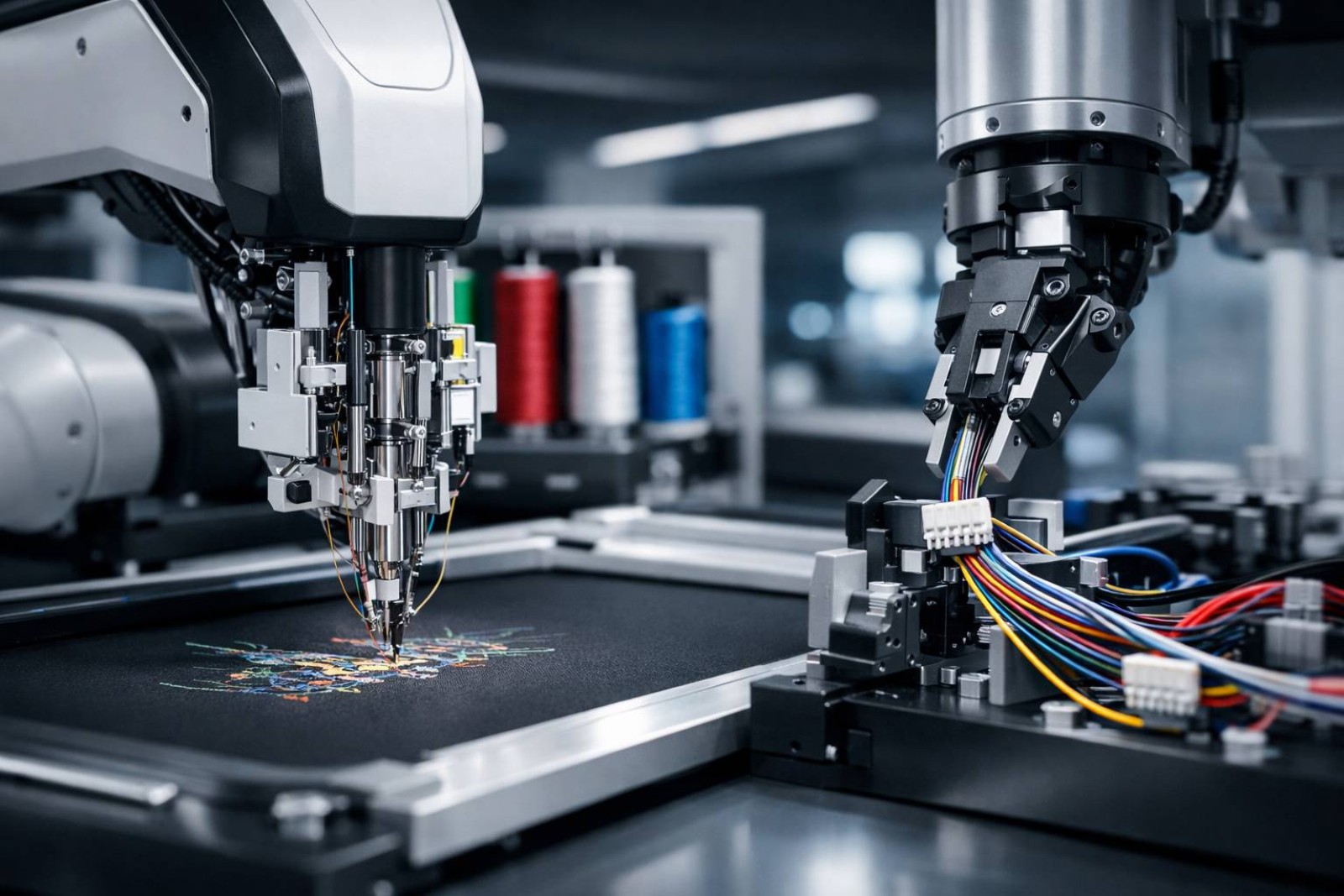
⬤ Robotics startup TARS just showed off what they're calling the world's first autonomous embroidery robot—a system that can stitch soft fabrics with sub-millimeter accuracy using embodied AI. The company wrapped up its "Needle Kung Fu" tech demo, proving their robots can handle delicate needlework that most automation struggles with. But here's the thing: this isn't about making decorative pillows. TARS built this to solve way bigger industrial headaches.
⬤ The real target? Wire harness assembly. That's the notoriously tricky manufacturing task where flexible wires need precise handling—something factories have relied on human workers for because robots just couldn't nail it. TARS is claiming they've cracked this "Goldbach Conjecture" of automation by transferring those same embroidery skills to industrial wiring. Their demos show it working reliably, which they say backs up what they call the Embodied AI Scaling Law.
⬤ Founder and CEO Dr. Yilun Chen credits their full-stack "DATA–AI–PHYSICS" setup. They collect real-world training data through SenseHub, a wearable system that captures vision, touch, and motion from actual workers. That feeds into TARS AWE 2.0, their foundation model that learns end-to-end and adapts across different tasks. Their T-Series and A-Series robot hardware is purpose-built to minimize the gap between what the AI learns and what it can actually pull off in the physical world.

⬤ Founded in February 2025, TARS is barely a year old but already pushing toward early industrial rollouts. Their approach shows how combining real-world data collection, learning models, and specialized hardware can tackle automation challenges that involve both flexibility and precision—potentially opening doors for manufacturing tasks that have always needed human hands.
 Sergey Diakov



