
 Alex Dudov
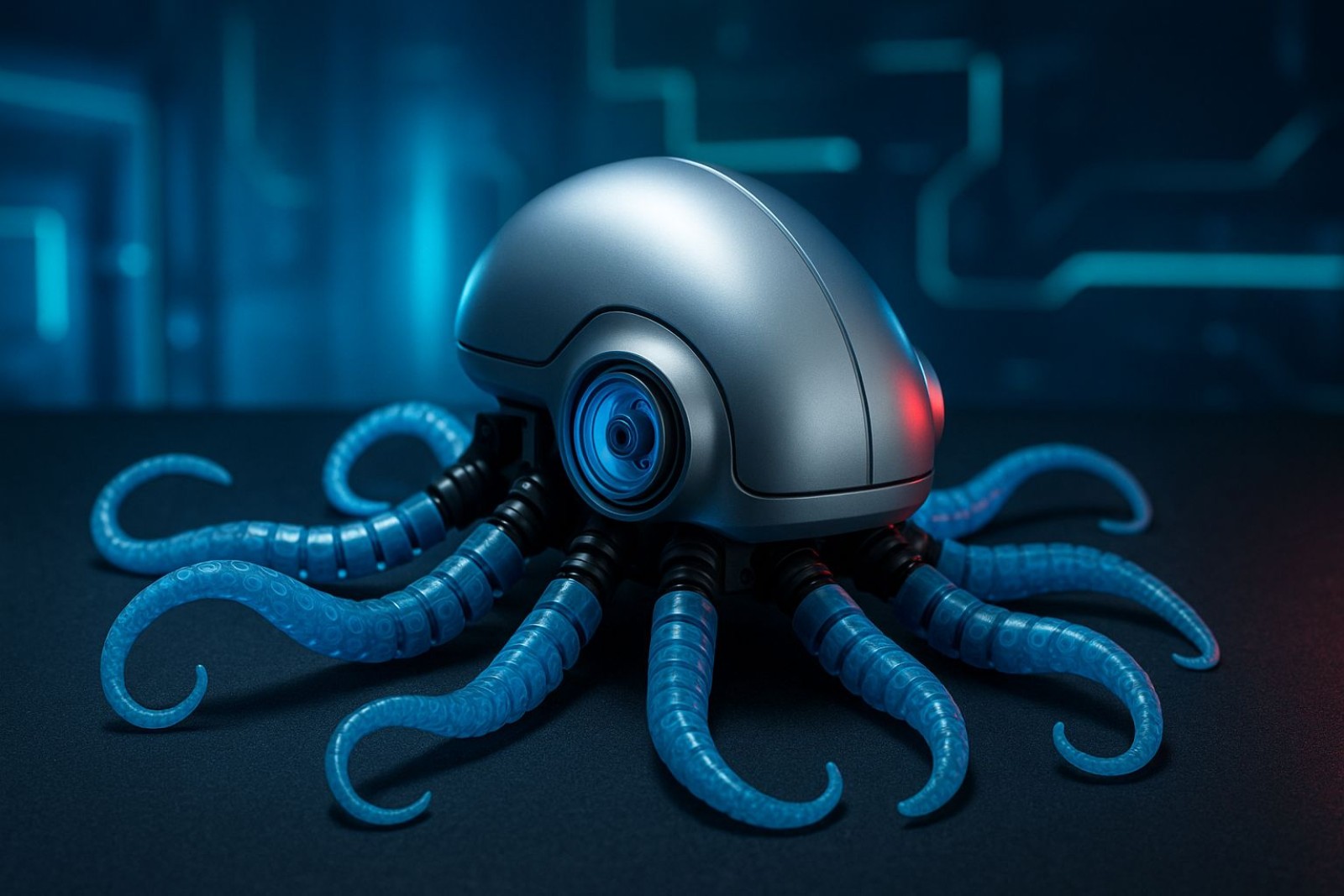
⬤ A team at the National University of Singapore has built an octopus-inspired swimming robot that cuts through traditional complexity with breakthrough simplicity. The design uses just two motors connected to an umbrella-like structure that synchronizes all eight soft arms, replacing the eight separate actuators that older systems needed. This streamlined approach keeps the natural flexibility and coordination of real octopus movement while making the whole system more practical.
⬤ The robot nails the octopus swimming style with surprising accuracy. Its arms open gently to reduce drag, then snap shut to create powerful thrust bursts that push it forward smoothly. Lab testing showed it hitting speeds up to 314 mm/s, matching or beating more complicated prototypes that pack way more mechanical components. That performance proves you don't need complexity to get results.
⬤ The simplified mechanics translate directly into better energy efficiency, letting the robot operate longer on the same power while keeping control systems straightforward. The team showed this stripped-down design delivers the same performance as systems with far more parts, creating a foundation that's both scalable and tough enough for real underwater work. For marine applications where battery life matters and reliability is everything, those energy savings are game-changing.
⬤ This project highlights how studying nature keeps pushing robotics forward in practical directions. The Singapore team's work proves biological principles can lead to systems that are simpler, more efficient, and better suited for actual deployment. As soft robotics evolves toward designs that maximize functionality while minimizing complexity, breakthroughs like this octopus-inspired robot show the field is headed somewhere promising.
 Alex Dudov



