
 Alex Dudov
⬤ The conversation around Model Context Protocol and Function Calling has evolved from "which one is better" to "how they work together." Developers now deploy both within modern agent systems, treating them as complementary rather than competitive. The accompanying diagram shows this shift clearly—mapping out how MCP and Function Calling operate at different layers, from user queries and tool selection through to execution and response handling across client, server, and model components.
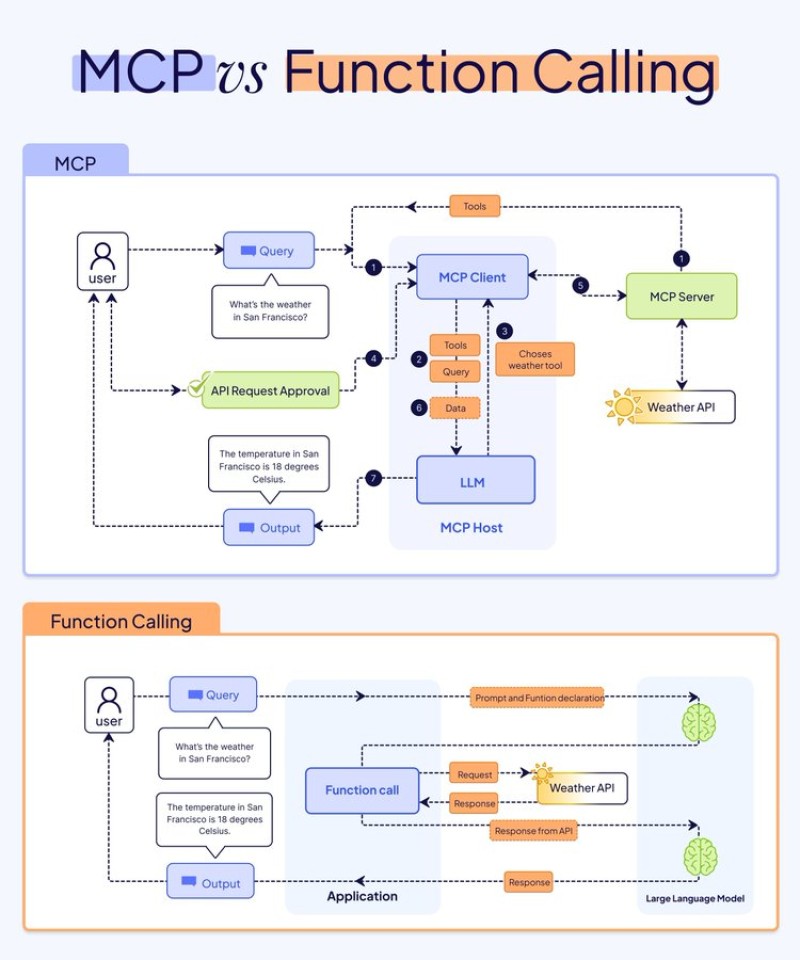
⬤ Function Calling handles a specific job: letting a language model figure out when it needs an external tool and how to request it. It defines the parameters and format needed for an action, then triggers that tool call in a structured way. But here's the catch—Function Calling is usually tied to one specific app context or model provider. That means every time you switch models or environments, you're basically rebuilding those integrations from scratch, which gets messy fast as your system grows.
⬤ Model Context Protocol solves that headache by standardizing how tools get discovered, exposed, and served across different systems. Instead of hardcoding tool definitions into each model integration, MCP creates a universal interface that separates tools from the language model itself. Looking at the diagram, MCP acts as a middle layer that lets you reuse one tool implementation across multiple models and runtimes—including external APIs. Less duplication, easier maintenance, especially as the model ecosystem keeps changing.
⬤ Why this pairing matters: it fundamentally changes how agent workflows get built. Function Calling makes the decision and structures the request. MCP handles tool compatibility and delivery. Together, they create cleaner separation between components and more flexible system design. As agent-based applications increasingly need coordinated tool usage, this combined architecture gives developers a more scalable and standardized foundation moving forward.
 Alex Dudov



