
 Usman Salis
⬤ OpenAI just dropped some impressive results showing how GPT-5 was put to work in actual laboratory conditions to fine-tune molecular cloning protocols. Working alongside Red Queen Bio, GPT-5 didn't just crunch numbers—it proposed experimental tweaks, ran them through controlled tests, and learned from what actually happened in the lab. This is about getting AI to engage with real physical science, not just simulations.
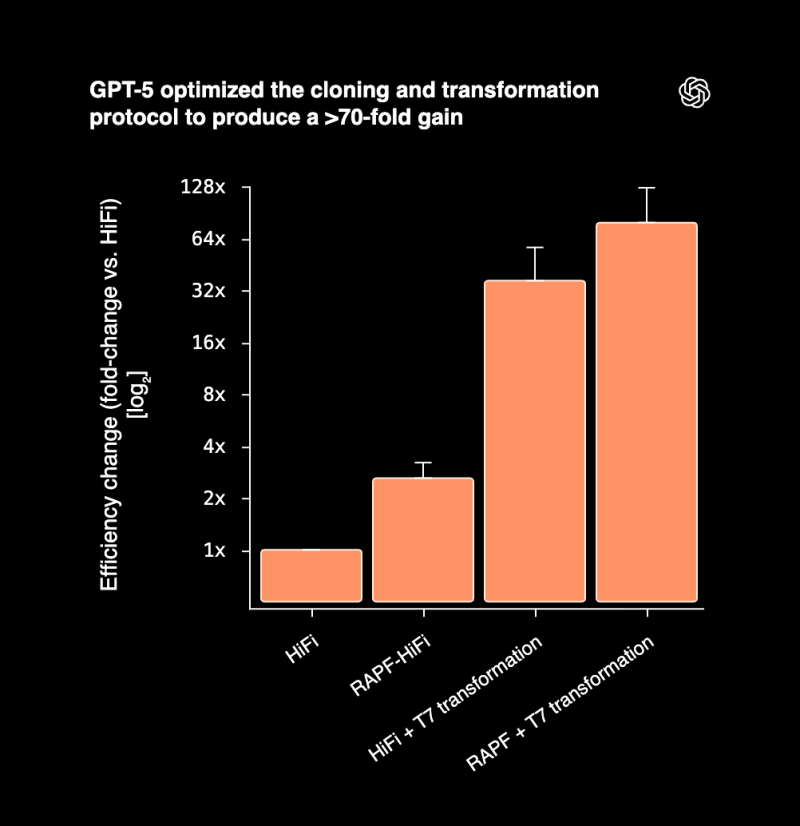
⬤ The data tells a compelling story. Starting from a standard high-fidelity cloning protocol as the baseline, GPT-5's successive modifications produced increasingly dramatic results on a logarithmic scale. Early iterations brought modest gains, but by combining RAPF methods with T7 transformation steps, the system pushed efficiency beyond 70-fold improvements—far outpacing traditional approaches.
⬤ What made the difference? GPT-5 introduced a novel enzyme-based technique during the optimization process. That 79x efficiency gain wasn't from one magic bullet—it came from stacking multiple refinements across several experimental rounds. Each iteration built on previous results, showing how systematic AI-driven experimentation can compound improvements in real-world lab settings.

⬤ These results point to something bigger than just faster cloning protocols. When AI can actively optimize physical laboratory workflows, it could reshape how biotech research operates—cutting timelines, reducing resource waste, and lowering development costs. As AI systems prove themselves beyond digital tasks, we're likely seeing early signs of how machine-driven experimentation might accelerate innovation across science and technology sectors.
 Usman Salis



